The news
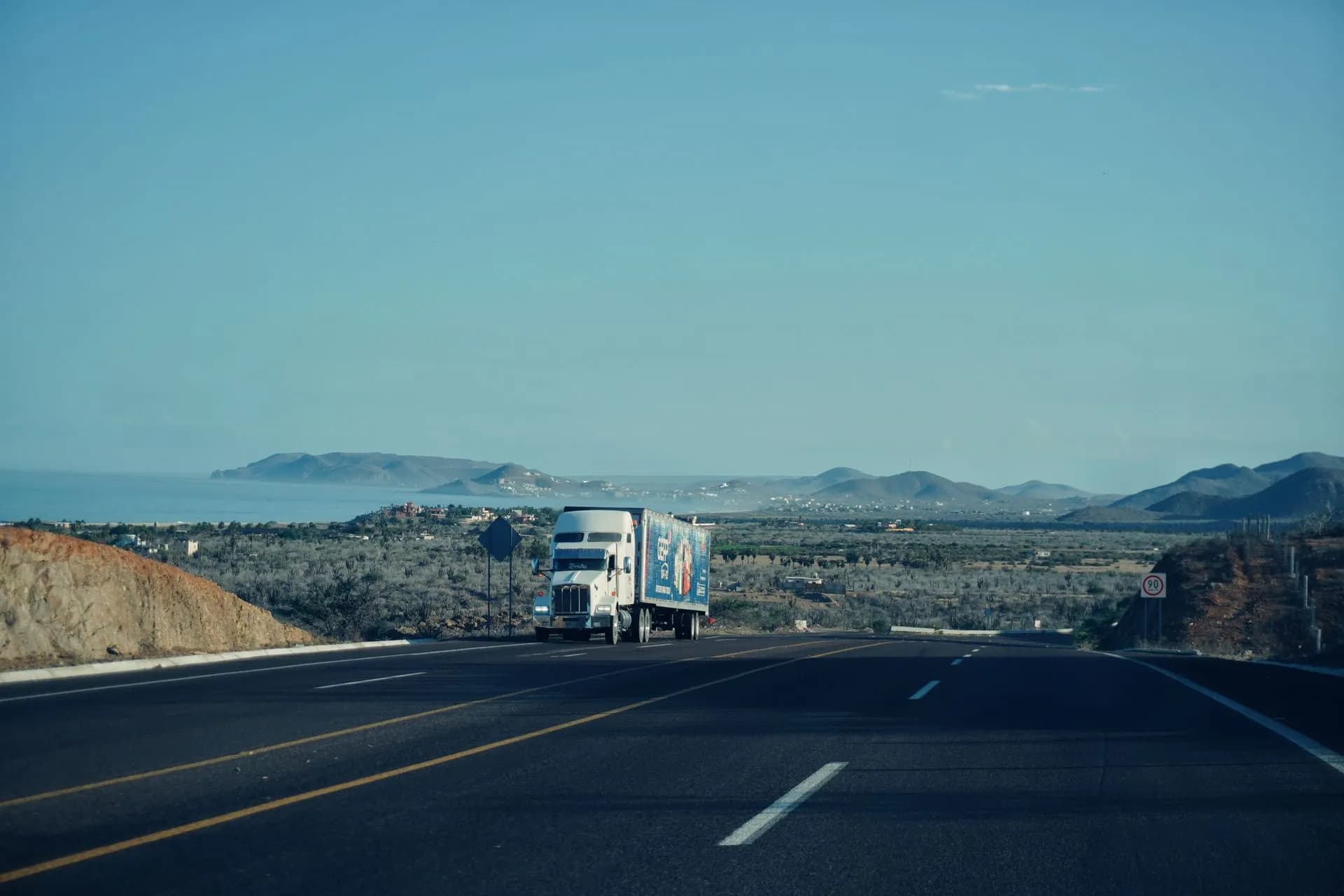
Aurora Innovation (AUR) Chief Financial Officer David Maday says the plan to have more than 30,000 Aurora driverless trucks in operation by 2030 is realistic. He made the case in a TechCrunch interview published September 28, 2026, five days after the company's investor day.
Aurora set out the 2030 vision at its annual analyst and investor day on Wednesday, September 23. The company's release that day described a multi-billion-dollar revenue stream and software-like gross margins for its driver-as-a-service business. TechCrunch and FreightWaves reported that Aurora put 2030 revenue above $5 billion, and FreightWaves reported a gross margin target of about 60%.
The starting base is small. Aurora said it is fully allocated to finish 2026 with 200 driverless trucks running under transport-as-a-service agreements, and TechCrunch reported that fleet equals an $80 million revenue run rate. According to TechCrunch, the company expects more than 1,000 trucks a year later.
Maday argued the target looks modest next to the truck market. He told TechCrunch that the four major truck makers build between 250,000 and 300,000 new trucks a year. “I don't think it's aspirational. I think we can do it,” he said. Investors have been less convinced: TechCrunch reported that Aurora shares have slid since the investor day and closed down 12.42% at $5.29 on Monday, September 28.
The plan depends on a change in business model. Today Aurora owns the trucks and charges customers including Detmar Logistics, Hirschbach, McLane and Werner about $2 per mile, fuel surcharge included, according to TechCrunch. Aurora plans to cap that model at about 500 trucks.
Starting in 2027, Aurora plans a driver-as-a-service model in which carriers buy the trucks themselves and pay roughly $0.85 per mile for the self-driving system as a subscription. Aurora said Hirschbach intends to own and operate 500 trucks this way, with deliveries starting in 2027.
The numbers
- 2030 driverless truck target
- More than 30,000
- 2030 revenue target (as reported by TechCrunch and FreightWaves)
- More than $5 billion
- Planned fleet at end of 2026
- 200 driverless trucks
- Revenue run rate at 200 trucks (TechCrunch)
- $80 million
- Transport-as-a-service price (TechCrunch)
- About $2 per mile
- Driver-as-a-service price (TechCrunch)
- About $0.85 per mile
- Driverless miles since commercial launch (Aurora)
- More than 500,000
- Share price at close, September 28 (TechCrunch)
- $5.29, down 12.42%
Why CEOs should care
For shippers and logistics leaders, the numbers to watch are per mile. Aurora prices its current service at about $2 a mile, while the 2027 model shifts truck ownership to carriers, who then pay about $0.85 a mile for the driving software. Werner Enterprises (WERN) executive Daragh Mahon told FreightWaves his company still sees a gap in the economics, and said he expects to know within a few months whether it can make them work. Ask your carriers whether autonomous capacity is priced into their bids, on which lanes, and who carries the liability if a truck is sidelined.
For CFOs, the case rests on utilization. Aurora says its trucks are running at an annualized rate of more than 225,000 miles a year, more than double a conventional truck, and FreightWaves reported that Detmar's driverless trucks are handling five to six loads a day versus 2 to 2.5 for its human drivers. Those figures come from Aurora and its customers, so request lane-level data before building them into a budget. Keep long-term freight contracts flexible rather than assuming 2030 capacity arrives on schedule.
For boards, treat the 2030 target as a company forecast. Aurora's own release carries forward-looking caveats, and FreightWaves reported that it now targets breakeven gross margin, meaning revenue covers the direct cost of running trucks, in the first half of 2027 at about 500 trucks. That milestone is a more near-term test than the 2030 figure.
The bigger picture
Aurora's supply plan leans on truck makers building autonomy in at the factory. The company said Roush has begun volume upfitting of International LT Series trucks and is targeting 20 trucks a week in October, that its system is integrated on the Volvo VNL Autonomous at Volvo's New River Valley plant in Virginia, and that PACCAR (PCAR) is working with it on factory integration of its third-generation hardware. TechCrunch reported that Aumovio, formerly Continental's automotive unit, will mass-produce that hardware from the end of 2027 and is also financing it for Aurora.
By our calculation using Maday's figures, 30,000 trucks would equal 10% to 12% of one year's output from the four major manufacturers. That is small against the market, as Maday says, but large against a fleet that will number 200 at the end of 2026.
What’s next
Near-term checkpoints include whether Roush reaches 20 trucks a week in October, whether Aurora exits 2026 with 200 driverless trucks, the start of Hirschbach's truck deliveries in 2027, and breakeven gross margin in the first half of 2027. Volvo Autonomous Solutions told FreightWaves it expects more than 300 of its trucks running the Aurora system by the end of 2027.
What “Fact-checked” means
Fact-checking means testing a story’s facts against the evidence before it is published. This story went through at least two separate checks before this version was published.
- What we checked
- Its names, figures, dates, job titles, quotes and who said what were checked against the story’s sources, including its main source where it could be opened. The headline was checked for accuracy and overstatement.
- How
- A first check reviewed the whole story. If it passed, a second, skeptical check went back to the sources to look for mistakes in the most important facts. If a check flagged the story, it was edited to fix the problems found, and a separate re-check then reviewed the whole story again.
- Who
- The checks are made by our newsroom, as steps kept separate from the writing, under rules set by our editor, Hussein Mukhtar. A story the checks still flag is held for the editor, who decides whether it is fixed, published or dropped.
- If something is wrong
- “Fact-checked” does not mean error-free. If a material error is found after publication, we correct the story and add a note saying what changed. Report an error