The news
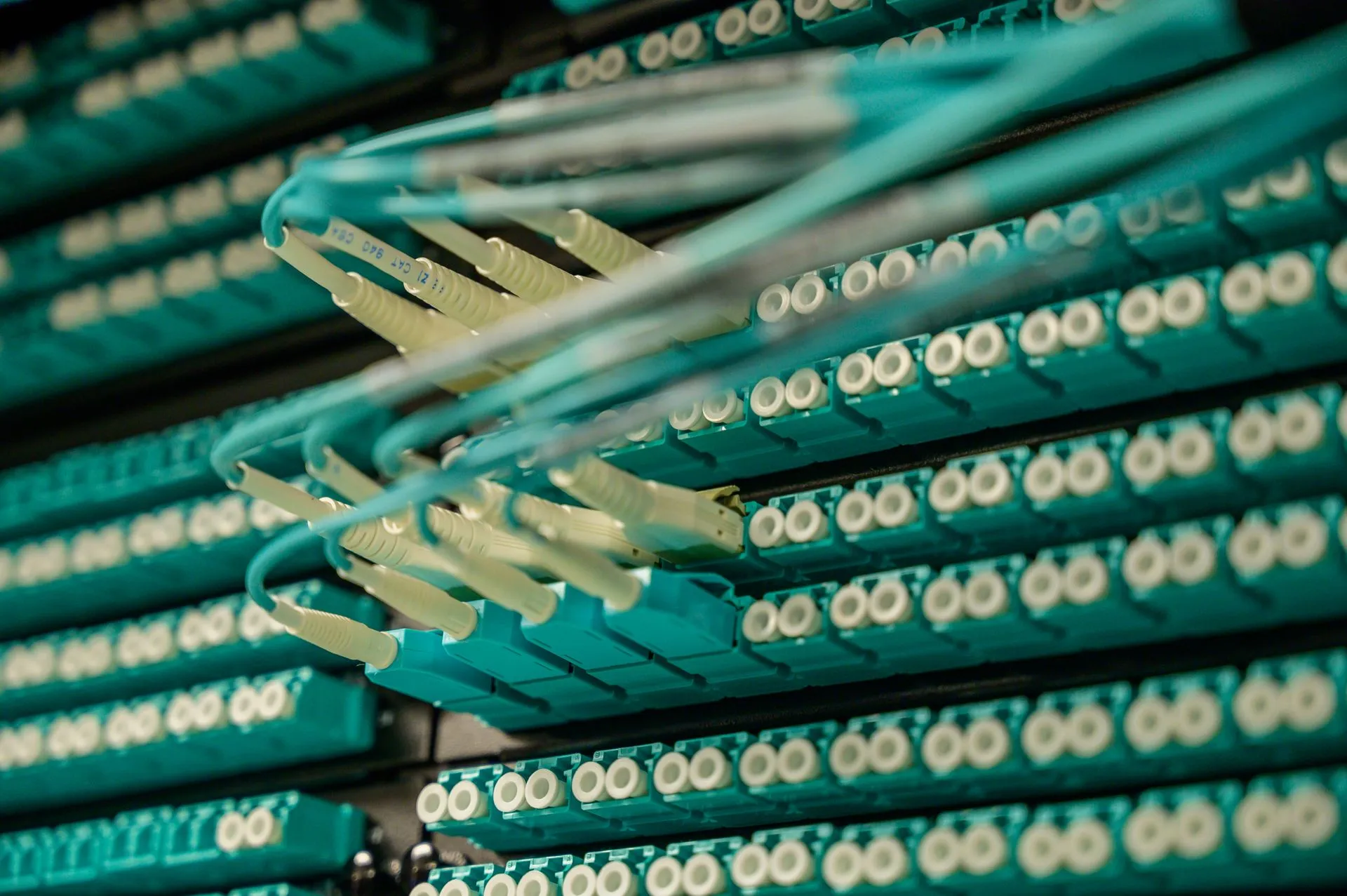
AT&T (T) and Corning (GLW) announced on September 29, 2026, a multi-year agreement valued at more than $3 billion for Corning to supply fiber and cable for AT&T's network. The companies tied the AT&T Corning fiber deal to AI-driven data demand.
AT&T said the average household on its fiber network now uses more than 1 terabyte of data a month, five times the 2016 level, and it expects that to reach 2 to 2.5 terabytes by 2030. The carrier said the deal supports its commitment to bring fast internet to 60 million Americans by the end of 2030. It also reiterated the financial outlook from its second-quarter 2026 results, which it said already reflects the agreement.
The contract is a large step up from the pair's last one. Converge Digest reported that AT&T and Corning announced a $1 billion commitment in October 2024 and that AT&T reached 38.6 million fiber locations in the second quarter of 2026. AT&T Chairman and CEO John Stankey said in the release that fiber "remains the gold standard for superior internet connectivity." Corning said it continues to expand U.S. fiber and cable manufacturing, including at North Carolina facilities.
Comcast (CMCSA) announced the same day that it is deploying fiber sensing technology across its network. The system analyzes vibrations traveling through fiber lines to detect and pinpoint nearby activity, such as construction equipment working near a buried cable, and alerts Comcast teams early. Comcast said it is exploring pairing the technology with AI, which could include automatically sending a drone to view damage, vandalism or wildfires.
Comcast has also begun field trials of the Opti Max OM6180 node from Aurora Networks, a business of Vistance Networks (VISN), according to Converge Digest and Advanced Television. DOCSIS 4.0 is the latest standard for running internet over cable TV lines, and the node supports both of its versions, Full Duplex and Extended Spectrum, on one platform. Comcast is separately lab testing an Aurora smart amplifier that runs up to 1.8 GHz and fits existing housings.
Also on September 29, Calix (CALX) and the internet provider Astound said they completed a trial of Calix's 50G-PON system. A passive optical network (PON) shares one fiber among many customers, and this version delivers 50 gigabits per second downstream. Calix said the equipment ran alongside Astound's existing XGS-PON network using the same operating model, workflows and back-office systems.
The numbers
- AT&T–Corning supply agreement
- More than $3 billion, multi-year
- Prior AT&T–Corning commitment (October 2024)
- $1 billion (per Converge Digest)
- Average AT&T Fiber household data use
- More than 1 TB a month, 5x 2016
- AT&T's expected household use by 2030
- 2 to 2.5 TB a month
- Calix 50G-PON downstream speed in Astound trial
- 50 Gbps
Why CEOs should care
For network and facilities buyers, the signal is that fiber is being reserved years ahead by the largest customers. Broadband Breakfast reported that Corning signed a similar multibillion-dollar deal with Verizon less than a month earlier, a data center supply deal with Amazon in June and a $6 billion agreement with Meta in January. If you are planning new branch sites, campus links or data center interconnects, ask carriers and contractors for written lead times on new fiber builds and whether multi-year circuit contracts carry price escalators tied to materials.
For CIOs, the Comcast and Astound announcements point to a different path to more bandwidth: upgrading equipment on lines already in the ground instead of digging new routes. Ask your providers which upgrade is on the roadmap for each of your locations (DOCSIS 4.0, XGS-PON or 50G-PON), when it arrives, and what upload speeds come with it, since cloud backup, video and AI workloads push data both ways. Reliability matters as much as speed: ask how quickly a provider detects and locates a cable cut, and whether your critical sites have physically diverse routes.
For CFOs and boards, AT&T said its existing outlook already reflects the Corning agreement, so the deal is part of planned spending rather than a new line item. The practical question for companies that depend on connectivity is timing. Multi-year connectivity contracts signed now should state service dates, upgrade commitments and outage credits clearly, because carriers are setting their build priorities for the rest of the decade.
The bigger picture
The AI boom is usually discussed in terms of chips and power, but it also runs through glass. Converge Digest said the recent agreements show operators securing fiber supply years in advance as AI, cloud and conventional connectivity compete for manufacturing capacity. Broadband Breakfast noted that participants in BEAD, the federal broadband subsidy program, also compete for American-made fiber, and that Nvidia invested $500 million in Corning manufacturing expansion in May.
What’s next
Converge Digest reported that AT&T aims to pass more than 40 million fiber locations by the end of 2026, a target its next quarterly results will test. Converge Digest said no commercial deployment date has been announced for the Aurora node or amplifier, and Calix described 50G-PON as an option Astound can deploy without naming a launch date. Watch whether other carriers announce multi-year fiber supply deals of their own.
What “Fact-checked” means
Fact-checking means testing a story’s facts against the evidence before it is published. This story went through at least two separate checks before this version was published.
- What we checked
- Its names, figures, dates, job titles, quotes and who said what were checked against the story’s sources, including its main source where it could be opened. The headline was checked for accuracy and overstatement.
- How
- A first check reviewed the whole story. If it passed, a second, skeptical check went back to the sources to look for mistakes in the most important facts. If a check flagged the story, it was edited to fix the problems found, and a separate re-check then reviewed the whole story again.
- Who
- The checks are made by our newsroom, as steps kept separate from the writing, under rules set by our editor, Hussein Mukhtar. A story the checks still flag is held for the editor, who decides whether it is fixed, published or dropped.
- If something is wrong
- “Fact-checked” does not mean error-free. If a material error is found after publication, we correct the story and add a note saying what changed. Report an error