The news
On August 19, 2026, Marvell Technology (MRVL) disclosed that it had issued Google a warrant to buy up to 58,970,907 Marvell shares at $206.58 each. Most of the Google Marvell warrant vests only as Google buys custom AI chips under a new supply agreement.
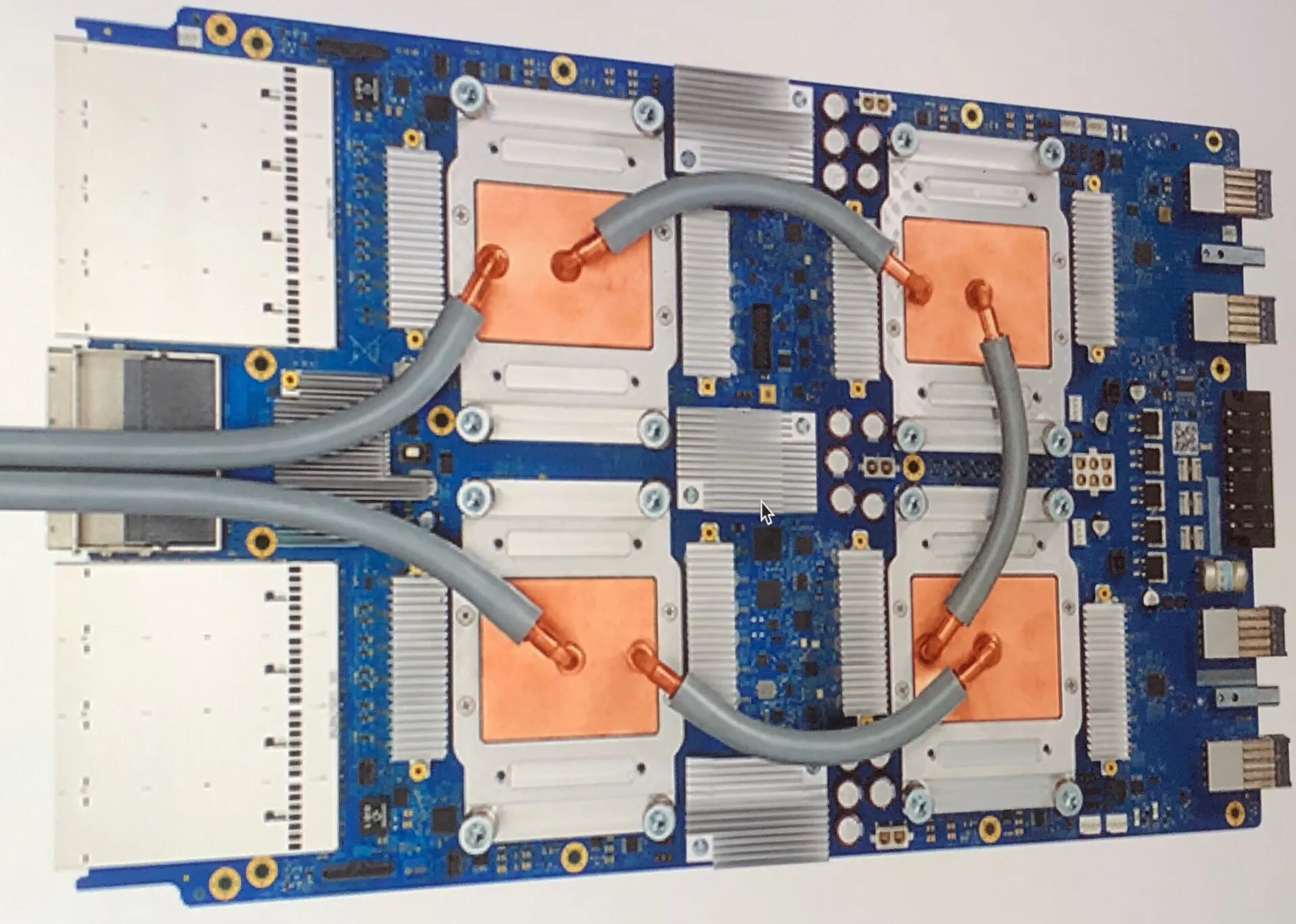
According to Marvell's Form 8-K, the two companies signed a commercial agreement on July 29, 2026, to develop custom semiconductor products. The filing says the programs attach to Google's TPU ecosystem. TPUs, or tensor processing units, are Google's in-house AI chips. The scope covers AI inference accelerators, storage controllers, network interface controllers, memory interface controllers and near-memory compute. Marvell issued the warrant on August 18, 2026.
The filing splits vesting into two parts. A time-based block of 1,360,867 shares vests quarterly over the first year. The remaining 57,610,040 shares vest in 240 tranches, one for each $500 million of qualifying revenue Marvell earns from Google, counted from the third quarter of Marvell's fiscal 2027 through fiscal 2033. The warrant agreement sets that measuring period as August 1, 2026, to January 29, 2033.
The warrant agreement defines qualifying products as custom chips under a statement of work that gives Google the right to decide whether Marvell may sell the product to other customers. Google can exercise for cash or through a cashless exercise, receives customary registration rights, and faces lock-up terms plus a daily selling cap of 10% of average trading volume. The warrant expires on August 18, 2033.
Reuters reported on August 19 that Marvell shares jumped nearly 8%, while Broadcom (AVGO), which it described as Google's main custom chip partner so far, fell more than 5%. Alphabet (GOOGL) was little changed. Reuters valued the potential stake at $12.18 billion and said meeting every target could bring Marvell roughly $120 billion in revenue through fiscal 2033.
Reuters said the warrant would make Google the fifth-largest investor in Marvell. Morningstar analyst William Kerwin, quoted by Reuters, called the deal "a big win for Marvell" but described it as a growing opportunity at Google for new suppliers rather than a displacement of Broadcom.
The numbers
- Shares covered by the warrant
- 58,970,907
- Exercise price per share
- $206.58
- Revenue tranches
- 240, one per $500 million of qualifying revenue
- Time-based shares vesting in year one
- 1,360,867
- Full stake at exercise price (Reuters)
- $12.18 billion
- Warrant expiry
- August 18, 2033
Why CEOs should care
For companies that run AI workloads on Google Cloud, the agreement matters because it covers the chips around Google's TPUs: inference accelerators, storage and networking controllers, and memory parts. Buyers planning multiyear AI capacity should ask their Google account teams how TPU-based capacity and pricing are expected to change in 2027 and 2028, and whether new hardware generations will affect committed-use contracts.
CFOs and boards at chip suppliers are looking at a template: equity for the customer, released only as revenue arrives. Full exercise would mean 58.97 million new Marvell shares, so boards weighing a similar deal need to compare that dilution with how reliable the promised volume is. The warrant also defines qualifying revenue net of any contra-revenue effect from the warrant's value, a detail finance teams should model before signing anything similar.
The control terms deserve as much attention as the price. Under the agreement, Google decides whether qualifying products can be sold to other customers. Boards and investors in any supplier should ask how much of the product roadmap such a clause would tie to one buyer, and what happens to the engineering team if that buyer's orders slow.
The bigger picture
The deal fits a pattern in which the biggest AI buyers take equity in the companies that supply them. Reuters compared it with AMD's supply agreement with OpenAI, which gave OpenAI an option on a stake of about 10% in AMD, and said such deals reflect rising demand for alternatives to Nvidia's costly processors. Morningstar's Kerwin framed Marvell's role as an addition to Google's supplier base, alongside Broadcom, rather than a replacement.
What happened next
On August 27, 2026, Marvell reported second-quarter fiscal 2027 revenue of $2.739 billion, up 37% from a year earlier, and forecast third-quarter revenue of $3.150 billion, plus or minus 5%. On the earnings call, CEO Matt Murphy said revenue through fiscal 2028 from programs covered by the Google agreement was already in the custom revenue target Marvell had given earlier, and that for fiscal 2029 and beyond, the agreement and several other programs gave Marvell more confidence it could grow its custom business to a significantly larger scale, according to an Investing.com transcript. Investing.com reported that Marvell shares fell 7.09% in after-hours trading that evening, to $224.34.
Murphy said Marvell would share more on its custom business at an Investor Day on October 6, 2026. Readers should watch that event and Marvell's quarterly filings for any disclosure of how many revenue tranches have vested.
What “Fact-checked” means
Fact-checking means testing a story’s facts against the evidence before it is published. This story went through at least two separate checks before this version was published.
- What we checked
- Its names, figures, dates, job titles, quotes and who said what were checked against the story’s sources, including its main source where it could be opened. The headline was checked for accuracy and overstatement.
- How
- A first check reviewed the whole story. If it passed, a second, skeptical check went back to the sources to look for mistakes in the most important facts. If a check flagged the story, it was edited to fix the problems found, and a separate re-check then reviewed the whole story again.
- Who
- The checks are made with our newsroom’s technology tools, as steps kept separate from the writing, under rules set by our editor, Hussein Mukhtar. A story the checks still flag is not published automatically; it is held for the editor, who decides whether it is fixed, published or dropped.
- Archive story
- It was written after the event. Its dates were checked against the date of the event, including the dates of any later developments it reports.
- If something is wrong
- “Fact-checked” does not mean error-free. If a material error is found after publication, we correct the story and add a note saying what changed. Report an error