The news
The Apple Broadcom deal unveiled on July 8, 2026, is expected to exceed $30 billion over multiple years and yield more than 15 billion US-made chips, Apple (AAPL) said, as it works to build a domestic chip supply chain.
Under the agreement, Broadcom (AVGO) will design and manufacture custom silicon parts and wireless connectivity technology for a wide range of Apple products, according to Apple's announcement. Apple said the deal is the largest commitment so far under its American Manufacturing Program (AMP), which it started in 2025 to speed up production in the United States, and that it will support hundreds of American jobs.
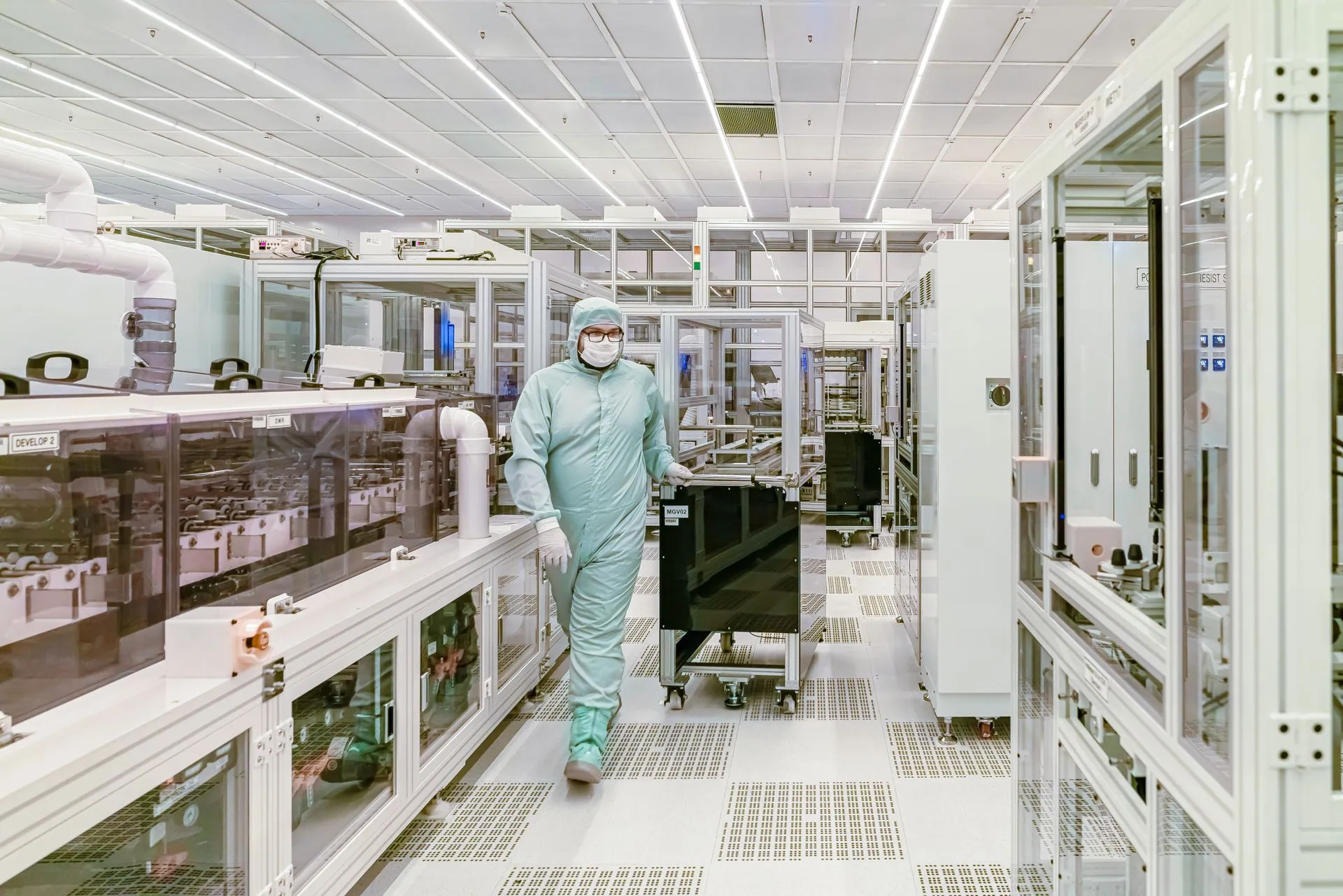
Apple said the commitment will let Broadcom expand and modernize its manufacturing facilities in Fort Collins, Colorado, with a $1.5 billion capital investment. The plant will make advanced radio frequency (RF) components, including film bulk acoustic resonator (FBAR) filters, a type of high-frequency radio filter, along with wireless connectivity technology. BizWest, a Colorado business publication, reported that the work will be done at Broadcom's Ziegler Road site.
Two days earlier, on July 6, Broadcom disclosed in a filing with the Securities and Exchange Commission (SEC) that it had signed new multi-year agreements with Apple running through 2031. Under those contracts, Broadcom will develop and supply a range of custom application-specific integrated circuits (ASICs), chips designed for a particular task, for multiple generations of Apple products. Neither company's announcements said whether the $30 billion figure includes those contracts.
Apple CEO Tim Cook said the parts made in Fort Collins are "essential to delivering the incredible performance and connectivity our customers expect." Broadcom President and CEO Hock Tan said Apple's commitment lets Broadcom expand its manufacturing footprint in the city. Apple said the spending counts toward its pledge to invest $600 billion in the US economy over four years. It did not give a timeline for when the new capacity will come online, CNBC reported.
The numbers
- Expected value of Apple's Broadcom commitment
- More than $30 billion
- US-made chips Apple expects the deal to produce
- More than 15 billion
- Broadcom capital spending in Fort Collins
- $1.5 billion
- Custom ASIC agreements run through
- 2031
- Apple's US investment pledge
- $600 billion over four years
Why CEOs should care
For procurement and operations leaders, the deal shows how the largest buyers now secure parts: a long-dated spending commitment that gives a supplier the confidence to add plant capacity. Companies that buy RF or wireless components, from device makers to industrial equipment firms, should ask suppliers how much of their US capacity is already committed to anchor customers and whether any new Fort Collins output will be open to other buyers.
CFOs should read the headline figure carefully. Macworld's Jason Cross noted that Apple gave no timeframe for the $30 billion and no baseline showing how much it adds to existing spending, and he argued the number most likely represents Apple agreeing to buy Broadcom parts rather than a direct investment. The $1.5 billion of plant spending is Broadcom's. When suppliers or peers announce large investment figures, separate purchase commitments, capital spending and existing spending before comparing them or presenting them to a board.
For boards, the announcement is another sign that US manufacturing pledges now sit at the center of how large tech companies deal with Washington; Apple's release included Cook's thanks to the president and his administration. Directors should ask management which critical components in their own products come from a single plant or a single country, and what a US-sourced alternative would cost and how long it would take.
The bigger picture
Apple launched AMP in 2025 with an initial $100 billion as part of its $600 billion, four-year US plan, Manufacturing Dive reported. In March 2026, Apple added Bosch, Cirrus Logic, TDK and Qnity Electronics and said it would spend $400 million through 2030 to support them. Earlier partners include Corning, which now makes all iPhone and Apple Watch cover glass in Harrodsburg, Kentucky. The outlet also reported that Apple is on track to buy well over 100 million advanced chips made at TSMC's Arizona plant.
Radio parts remain one area where Apple still relies on outside suppliers. Macworld noted that Apple is moving to its own cellular modems (C1 and C1X) and its own Wi-Fi and Bluetooth chip (N1), yet its devices still need many other radio components, such as FBAR filters.
What happened next
Broadcom reported fiscal third-quarter results on September 2, 2026, with revenue of $29.59 billion, up 86% from a year earlier, CNBC reported; the outlet's coverage centered on Broadcom's custom AI chip business with Google, OpenAI, Anthropic and Meta. In its quarterly report filed with the SEC on September 10, Broadcom said its Fort Collins facility is the sole source of the FBAR filters used in many of its wireless devices.
Neither company has published a construction timeline for the Fort Collins expansion in the sources reviewed for this story. What to watch: Broadcom's capital spending disclosures in its upcoming quarterly filings, hiring tied to the Fort Collins site, and whether Apple announces further AMP commitments toward its $600 billion goal.
What “Fact-checked” means
Fact-checking means testing a story’s facts against the evidence before it is published. This story went through at least two separate checks before this version was published.
- What we checked
- Its names, figures, dates, job titles, quotes and who said what were checked against the story’s sources, including its main source where it could be opened. The headline was checked for accuracy and overstatement.
- How
- A first check reviewed the whole story. If it passed, a second, skeptical check went back to the sources to look for mistakes in the most important facts. If a check flagged the story, it was edited to fix the problems found, and a separate re-check then reviewed the whole story again.
- Who
- The checks are made with our newsroom’s technology tools, as steps kept separate from the writing, under rules set by our editor, Hussein Mukhtar. A story the checks still flag is not published automatically; it is held for the editor, who decides whether it is fixed, published or dropped.
- Archive story
- It was written after the event. Its dates were checked against the date of the event, including the dates of any later developments it reports.
- If something is wrong
- “Fact-checked” does not mean error-free. If a material error is found after publication, we correct the story and add a note saying what changed. Report an error