The news
Oratomic funding news: Oratomic, a California developer of neutral-atom quantum computers, has raised a $475 million Series B at a $5.5 billion valuation, up from $1.5 billion, SiliconANGLE reported on October 8, 2026. The round brings its total funding to $775 million.
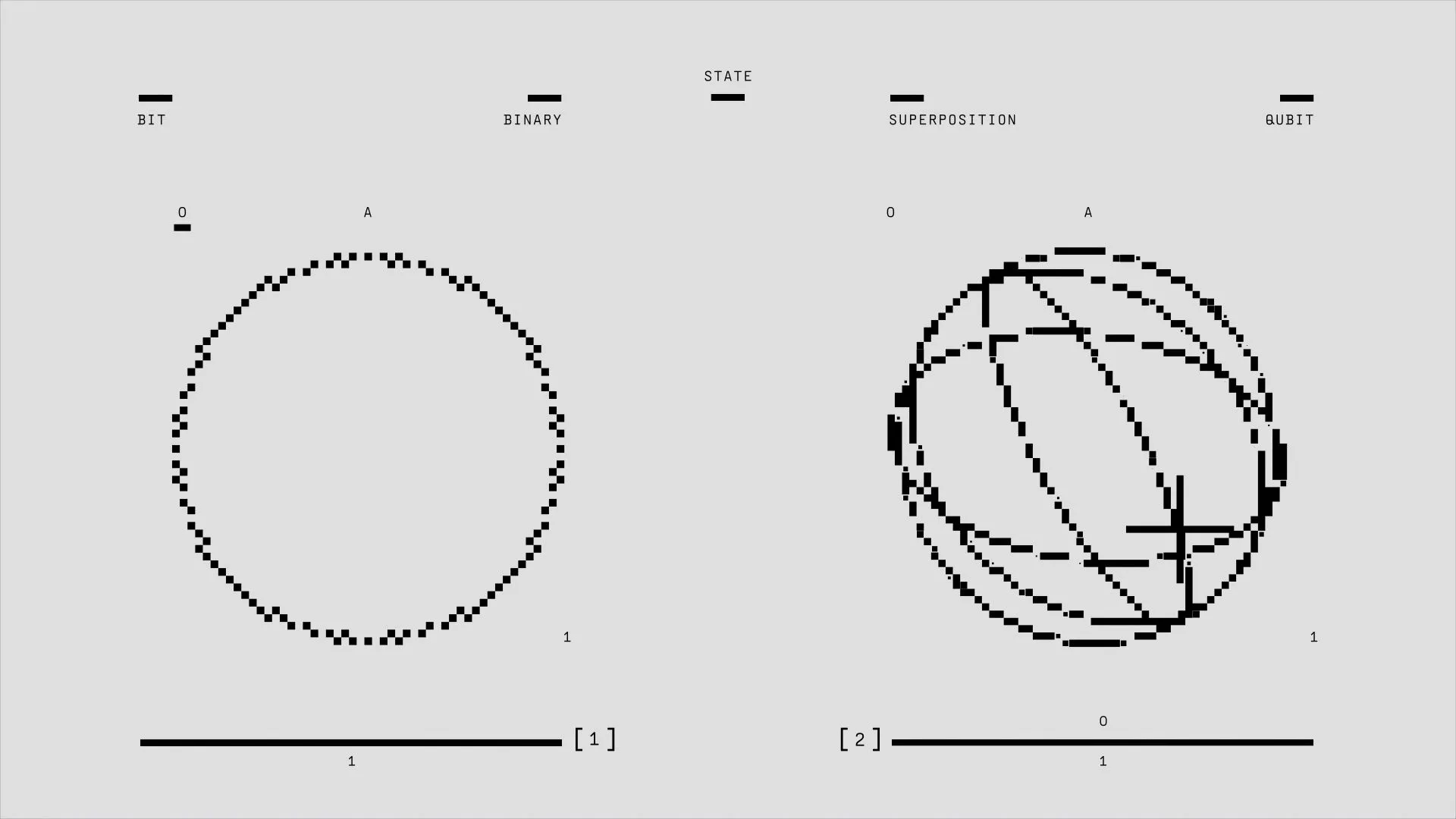
ARCH Venture Partners, Spark Capital, Khosla Ventures, Index Ventures, General Catalyst and Bezos Expeditions co-led the round, according to SiliconANGLE. Oratomic, led by CEO Dolev Bluvstein, uses reconfigurable arrays of neutral atoms as qubits, the basic units of quantum computing. It aims to scale to fault-tolerant machines, meaning systems that correct their own errors, with about 10,000 qubits.
On the same day, UK-based Universal Quantum announced a Series A of more than $100 million, co-led by DCVC and Firgun Ventures with participation from EDBI, Artal, Integral GlobalTech, Main Sequence and Hostplus, SiliconANGLE reported. Universal Quantum builds modular trapped-ion systems, which use charged atoms held by electric fields as qubits. It plans to develop chiplet-based interconnect technology, open its first research and development center outside Europe in Singapore, and grow in the US, Japan and at its German hub in Hamburg.
The rounds land against a sober forecast. Gartner predicts that more than half of quantum computing startups will be out of business by 2030, The Register reported on October 8. The research firm estimates there are 200 to 300 quantum startups.
Gartner forecasts worldwide quantum computing revenue of $869.9 million in 2026 and $1.1 billion in 2027, according to The Register. It expects banking, financial services and insurance to overtake the public sector as the largest customer group in 2028, at $289 million.
Unlike IBM and Google, which have other revenue to fund quantum research, startups depend on investors and can run out of money if they cannot show progress, The Register noted.
The numbers
- Oratomic Series B
- $475 million
- Oratomic valuation
- $5.5 billion (from $1.5 billion)
- Universal Quantum Series A
- More than $100 million
- Quantum startups worldwide (Gartner estimate)
- 200-300
- Gartner 2026 quantum revenue forecast
- $869.9 million
Why CEOs should care
For CIOs and CTOs piloting quantum computing, the message is to treat vendor choice as a survival bet. If Gartner is right, many current suppliers will not exist by 2030. Before signing a multi-year pilot, ask about runway, investors and what happens to your code and data if the vendor is acquired or shuts down. Favor work that is portable across hardware types.
For CFOs, the revenue numbers set expectations. A market Gartner sizes at $869.9 million in 2026 is small next to the capital being raised. Quantum spending today is research and readiness, not a return on investment. Gartner VP analyst Gaurav Gupta, quoted by The Register, said leaders should treat it as a multi-year journey.
For banks and insurers, Gartner's forecast that the sector becomes the largest quantum customer in 2028 suggests competitors are planning budgets now. Boards should ask whether there is an owner for quantum readiness, including post-quantum cryptography planning, even if hardware remains years from practical advantage.
The bigger picture
Capital in quantum is concentrating in a handful of companies with distinct technical approaches, much as it has in AI. Oratomic's valuation nearly quadrupled, while Gartner expects weaker players to fold. Government pressure also raises the bar: the US Department of Energy has launched a competitive initiative with up to ten participants aiming for a fault-tolerant quantum computer by 2028, The Register reported.
What’s next
Watch for consolidation: acquisitions of smaller quantum startups by better-funded rivals or large tech companies, and whether Oratomic and Universal Quantum hit technical milestones that justify their new funding.
What “Fact-checked” means
Fact-checking means testing a story’s facts against the evidence before it is published. This story went through at least two separate checks before this version was published.
- What we checked
- Its names, figures, dates, job titles, quotes and who said what were checked against the story’s sources, including its main source where it could be opened. The headline was checked for accuracy and overstatement.
- How
- A first check reviewed the whole story. If it passed, a second, skeptical check went back to the sources to look for mistakes in the most important facts. If a check flagged the story, it was edited to fix the problems found, and a separate re-check then reviewed the whole story again.
- Who
- The checks are made by our newsroom, as steps kept separate from the writing, under rules set by our editor, Hussein Mukhtar. A story the checks still flag is held for the editor, who decides whether it is fixed, published or dropped.
- If something is wrong
- “Fact-checked” does not mean error-free. If a material error is found after publication, we correct the story and add a note saying what changed. Report an error