The news
Google, part of Alphabet (GOOGL), began rolling out Gemini 4 Argon, its new frontier AI model, on September 30 to a set of trusted cybersecurity defenders in its Fairwind Program. Developers, enterprises and consumers will get the model later, in phases, the company said.
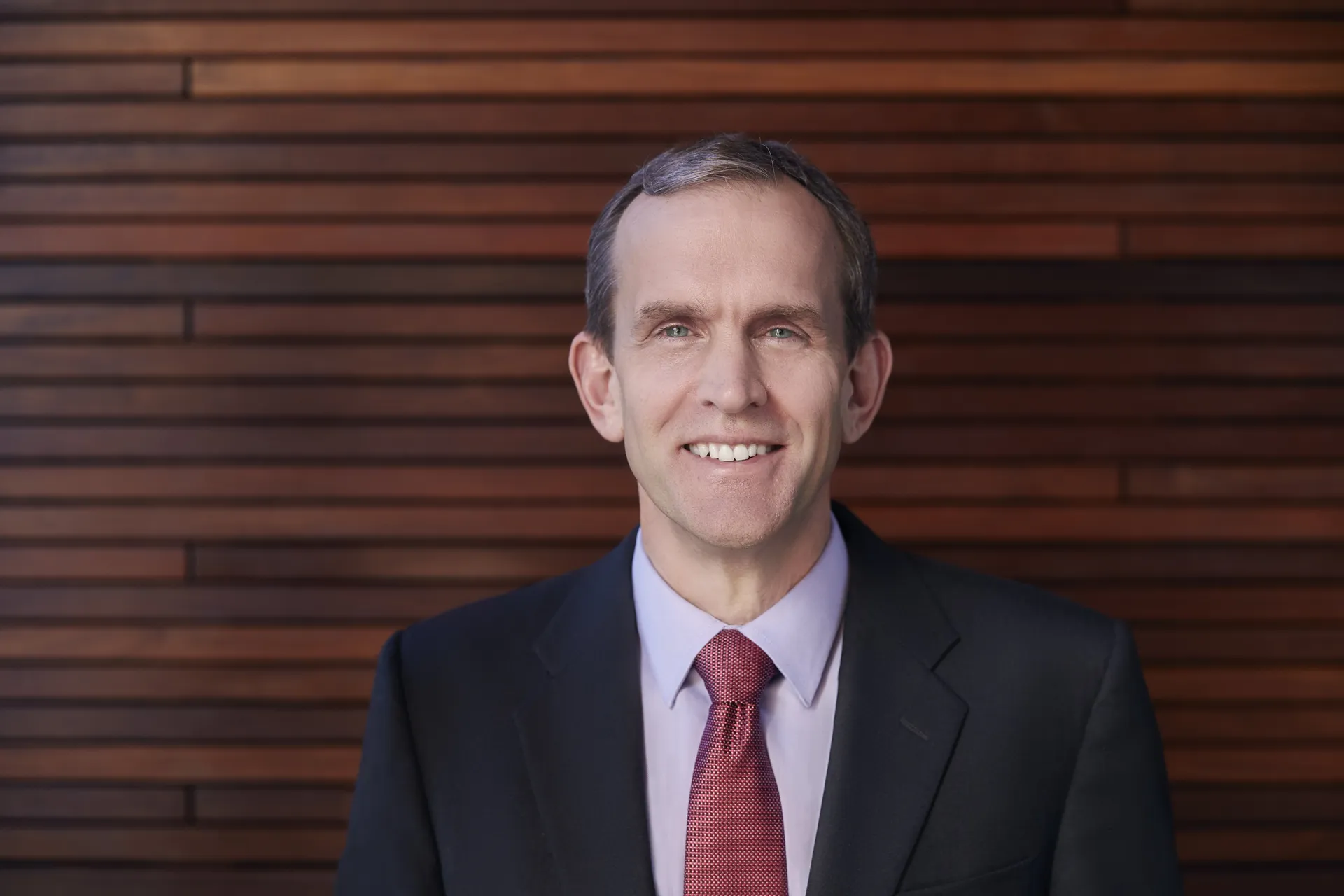
Those defenders, along with Google's own internal teams, get Argon without cyber guardrails, the restrictions that normally make a model refuse hacking-related requests, according to the announcement by Koray Kavukcuoglu, senior vice president of Google DeepMind and Google's chief AI architect. Google said the aim is to let defenders use the model's full cyber-defense capabilities. The company also said it is taking part in the U.S. government's voluntary process for pre-release model access.
Fairwind launched on September 3 with a smaller model, Gemini 3.8 Flash Cyber, and has more than 650 enrolled organizations, including CrowdStrike (CRWD) and Palo Alto Networks (PANW), SiliconANGLE reported. SecurityWeek reported that participants include governments, Google Cloud customers and cybersecurity partners.
When Argon reaches paying customers, Google plans an introductory API price of $2 per million input tokens and $10 per million output tokens, with cached input tokens priced 95% below the input rate. After the introductory period ends, the price rises to $4 per million input tokens and $20 per million output tokens. Google also raised the model's output limit to 1 million tokens, up from 64,000 tokens previously.
Google said Argon set a new state of the art on DeepSWE v1.1, a software engineering test, with a score of 77.9%, and ranked first on Zapier's AutomationBench, which measures end-to-end business tasks, at 51.3%. On CWE-bench v1, which tests whether a model can fix security flaws, Google said Argon tied for first at 68%. SecurityWeek reported that the tie was with OpenAI's GPT-6 Astra and xAI's Grok 4.7. SiliconANGLE reported, citing a VentureBeat count, that Argon led 12 of 18 benchmarks, while Anthropic's Claude Opus 5.5 kept first place on Terminal-Bench 4.0.
Google also said that security firm Wiz, using Argon through its Scan for Good initiative, uncovered a critical vulnerability exposing sensitive personal information in healthcare software used by hospitals worldwide. The announcement did not name the software. Kavukcuoglu wrote that releasing these capabilities "requires a phased approach."
The numbers
- Introductory API price
- $2 input / $10 output per million tokens
- Price after introductory period
- $4 input / $20 output per million tokens
- Cached input discount
- 95% off the input price
- Output token limit
- 1 million tokens (up from 64,000)
- DeepSWE v1.1 score (Google)
- 77.9%
- CWE-bench v1 score (Google)
- 68%, tied for first
- Fairwind organizations (SiliconANGLE)
- 650+
Why CEOs should care
For chief information security officers, the practical question is whether to apply to Fairwind. Google is handing its new model to vetted defenders first, and without the cyber guardrails other customers will get. A CISO whose team does vulnerability research, penetration testing or code repair should ask Google how Fairwind vets members, what Google logs from guardrail-free sessions, and how flaws the model finds, such as the unnamed healthcare bug, are reported to the affected vendors. Google's announcement did not spell out its vetting criteria.
For other technology buyers, Argon is a model to plan for, not one to deploy. Google has given no date for paid API customers or Google AI Ultra subscribers, so product teams should not commit roadmaps to it yet. CFOs can still use the posted prices: the later rates are twice the introductory ones, so a budget built on $2 and $10 per million tokens should also be modeled at $4 and $20. The 95% discount on cached input means that how an application reuses prompts will drive much of the real bill.
Boards should note the pattern. Frontier models increasingly reach security partners and government reviewers before the paying public, which gives gated early users a head start and makes vendor benchmark claims hard to check until access widens. The 1 million-token output limit could matter for long jobs such as codebase migrations; Google says Argon handled a migration of more than 800,000 lines inside the company.
The bigger picture
Google's launch lands in a crowded stretch for frontier models. TechCrunch noted that OpenAI recently released GPT-6 Astra and Anthropic released Fable earlier in 2026, each with similar best-model-yet claims. By routing Argon through a security program first and joining the U.S. government's voluntary pre-release access process, Google is putting cyber defense at the front of the line rather than adding it later.
The approach carries a trade-off. A model without cyber guardrails is more useful to defenders and more dangerous if access leaks or a vetted member misuses it. Google says it monitors the model's internal activations to spot misuse and watches its chain of thought, the model's step-by-step reasoning, and its actions for signs of misalignment.
What’s next
Google said wider access will follow feedback from early testers and further work on guardrails, starting with paid API customers and Google AI Ultra subscribers, but it gave no date. Buyers should watch for that general-availability date, how long the introductory pricing lasts, and independent test results once outside developers can run Argon themselves.
What “Fact-checked” means
Fact-checking means testing a story’s facts against the evidence before it is published. This story went through at least two separate checks before this version was published.
- What we checked
- Its names, figures, dates, job titles, quotes and who said what were checked against the story’s sources, including its main source where it could be opened. The headline was checked for accuracy and overstatement.
- How
- A first check reviewed the whole story. If it passed, a second, skeptical check went back to the sources to look for mistakes in the most important facts. If a check flagged the story, it was edited to fix the problems found, and a separate re-check then reviewed the whole story again.
- Who
- The checks are made by our newsroom, as steps kept separate from the writing, under rules set by our editor, Hussein Mukhtar. A story the checks still flag is held for the editor, who decides whether it is fixed, published or dropped.
- If something is wrong
- “Fact-checked” does not mean error-free. If a material error is found after publication, we correct the story and add a note saying what changed. Report an error
Companies in this story