
The news
Tekever, a Lisbon-based developer of AI-powered autonomous aircraft, announced on September 23 the first close of a $580 million Tekever Series D at a $6.4 billion valuation. The company said the money will fund international growth, manufacturing capacity and acquisitions.
UC Investments, the investment office of the University of California, and Baillie Gifford led the round. Merlyn Advisors joined as a new strategic investor, and existing shareholders Crescent Cove, Ventura Capital and Iberis Capital also participated, according to Tekever. The company described the $580 million as a first close, meaning more money may be added before the round is finished.
Tech Funding News reported that the valuation is nearly five times the roughly $1.3 billion the company was valued at previously, and that the investment is UC Investments' first direct deal in Europe. Jagdeep Singh Bachher, the university system's chief investment officer, pointed in the announcement to Tekever's two-decade record of operational use.
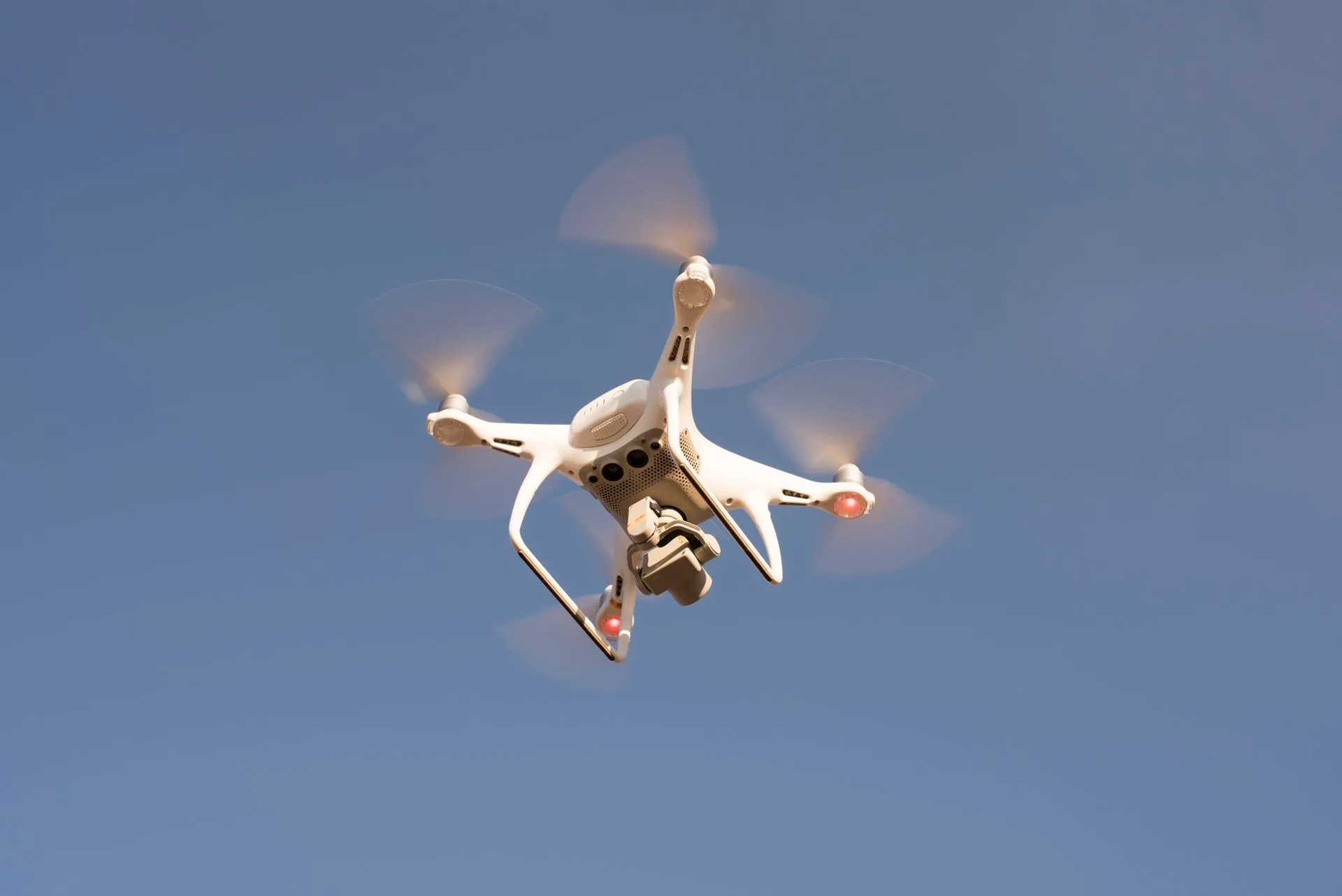
Tekever builds unmanned aircraft including the AR3, AR5 and ARX systems, along with a software platform called ATLAS. Its best-known recent win is CORVUS, a UK Ministry of Defence program for the British Army's persistent surveillance capability worth up to £400 million over ten years. Tech Funding News said the program will replace the Army's Watchkeeper drones with Tekever's AR5.
The company operates in Portugal, the United Kingdom (Bristol), France (Toulouse), the United States (North Carolina) and Estonia (Tallinn). Tech Funding News put its workforce at about 900 people, up 40% from a year earlier, and said it was founded in 2001. Founder and chief executive Ricardo Mendes said the round would help Tekever “move faster, scale further” as a global company built from Europe.
The numbers
- Series D first close
- $580 million
- Valuation
- $6.4 billion
- UK CORVUS contract
- Up to £400 million over 10 years
- Employees (Tech Funding News)
- About 900
Why CEOs should care
For executives in aerospace, logistics, energy and critical infrastructure, Tekever's raise is a reminder that dual-use technology, meaning products with both military and civilian applications, is now attracting growth rounds of this size. Tech Funding News noted that Tekever's drones are also used by the UK Home Office for English Channel patrols, a civilian-government use case. Operators of pipelines, ports or offshore assets should ask whether subscription-based aerial monitoring could replace some fixed sensors or crewed patrols, and what data-sharing terms come with it.
For CFOs and investors, the structure matters. A first close at a much higher valuation, backed by a university endowment and a long-term fund manager, suggests institutions now treat European defense technology as a mainstream growth category. That changes the competitive landscape for suppliers and acquirers: expect well-funded defense startups to buy component makers and software firms rather than partner with them, as Tekever itself signaled by listing acquisitions as a use of funds.
Boards of companies selling into government should consider the supply-chain angle. Large multiyear programs like CORVUS can reshape supplier lists for a decade. Directors can ask whether their firm's components, software or services qualify for these programs, and whether export controls or security clearances would be needed to compete.
The bigger picture
Tekever's valuation still trails the largest defense startups. Tech Funding News listed Munich's Helsing at an $18 billion valuation, Quantum Systems at $8 billion and U.S. leader Anduril at $61 billion, each after raising in 2026. The outlet also cited global venture funding for defense of $49.1 billion in 2025, up from $27.2 billion in 2024, and counted three European defense companies now valued above $1 billion.
The round also shows who is writing the checks. A university endowment office and a long-term fund manager led it, rather than a specialist defense fund. Multiyear government contracts such as CORVUS give that kind of investor visible future revenue to underwrite, which may help explain why defense suppliers with signed programs are commanding higher prices.
What’s next
Watch for additional closes that could push the Series D above $580 million, for acquisitions funded by the round, and for new government contracts outside the UK. Tekever has not disclosed revenue, so any figures it releases alongside new manufacturing sites will help show whether the valuation reflects current sales or future contracts.
What “Fact-checked” means
Fact-checking means testing a story’s facts against the evidence before it is published. This story went through at least two separate checks before this version was published.
- What we checked
- Its names, figures, dates, job titles, quotes and who said what were checked against the story’s sources, including its main source where it could be opened. The headline was checked for accuracy and overstatement.
- How
- A first check reviewed the whole story. If it passed, a second, skeptical check went back to the sources to look for mistakes in the most important facts. If a check flagged the story, it was edited to fix the problems found, and a separate re-check then reviewed the whole story again.
- Who
- The checks are made with our newsroom’s technology tools, as steps kept separate from the writing, under rules set by our editor, Hussein Mukhtar. A story the checks still flag is not published automatically; it is held for the editor, who decides whether it is fixed, published or dropped.
- If something is wrong
- “Fact-checked” does not mean error-free. If a material error is found after publication, we correct the story and add a note saying what changed. Report an error