
The news
Blackfuel, a Europe-based AI infrastructure company, came out of stealth on September 30, 2026, saying it holds more than $250 million in multi-year contracted revenue. On the same day, Digital Realty (DLR) announced it would host Blackfuel's AI inference platform in its Barcelona data center.
Inference is the work of running a trained AI model to answer requests, as opposed to training it. Blackfuel says it builds dedicated AI infrastructure along with AI-native systems that develop, test and tune inference engines across different hardware. Its stated goal is to maximize "useful tokens per megawatt": the amount of model output it can produce from each unit of power.
The business model is the notable part. According to its website, Blackfuel offers customers token access to dedicated inference capacity under long-term agreements. Tokens are the small chunks of text that AI models read and write, and the unit most AI providers already use for pricing. Blackfuel says it operates across the EU, Asia-Pacific and the US, and its newsroom lists partnerships with Digital Realty and NTT DATA. It has not disclosed who its contracted customers are.
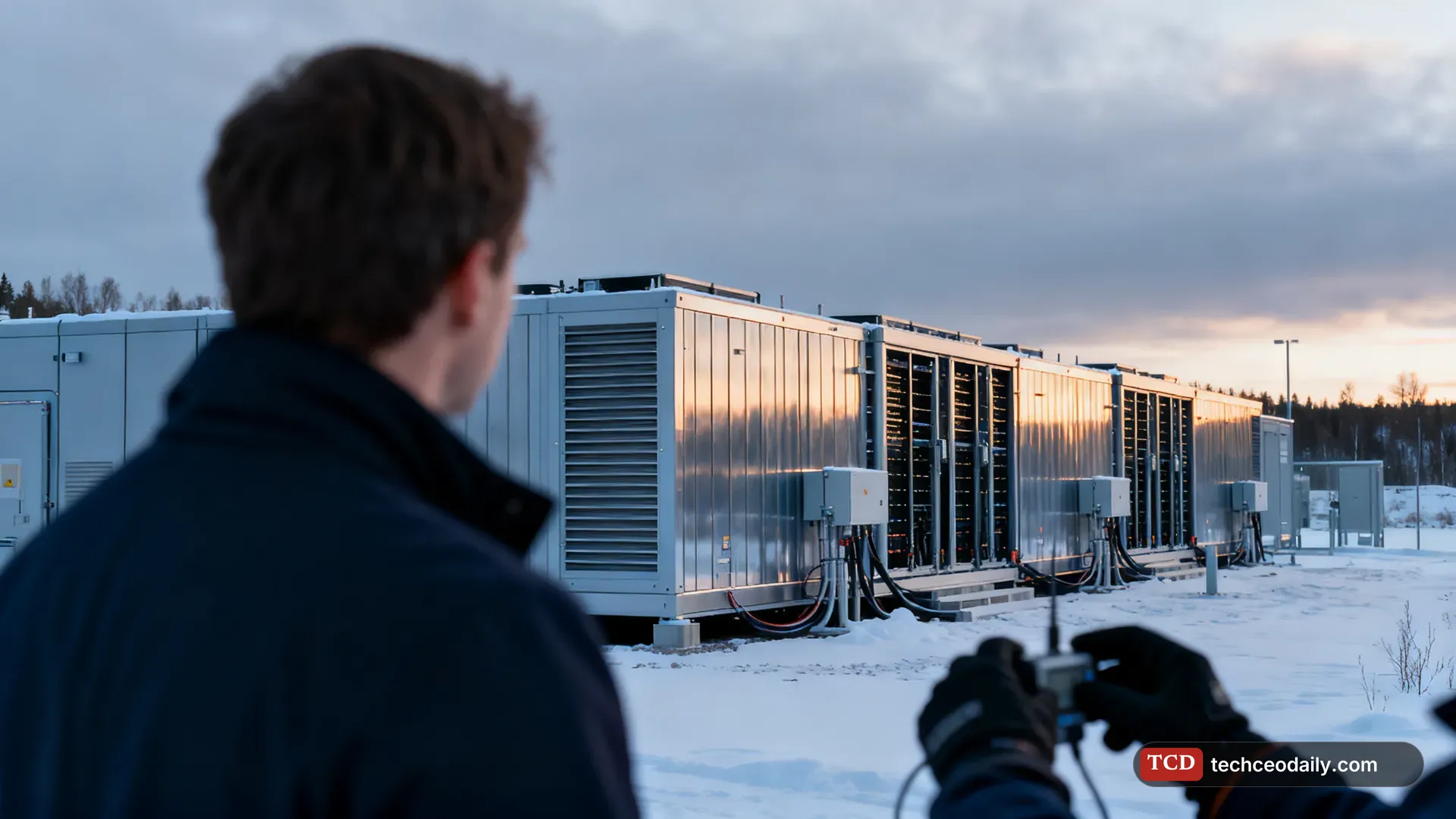
The Digital Realty deployment is multi-megawatt and sits at the BCN1 facility in Barcelona, Spain, according to the September 30 announcement. It is integrated with ServiceFabric, Digital Realty's interconnection platform, which the company says links more than 800 data centers worldwide. Digital Realty describes its own footprint as more than 300 facilities in over 55 metros across more than 30 countries.
The companies claim performance gains from placing inference close to network connections. Their release cites a 50-millisecond reduction in time-to-first-token, meaning how long a user waits for a model to begin answering, and a 1 to 2.5 second improvement in completing workflows that chain 20 to 50 sequential API calls. Those are the companies' figures, not independent measurements.
Digital Realty's chief technology officer, Chris Sharp, said in the release that running AI "takes power, cooling and connectivity working together as one platform." The release named Charles Kantor, Xavier Fischer and Dali Kilani as Blackfuel's co-founders. Neither company disclosed financial terms of the deployment or whether Blackfuel has raised outside funding.
The numbers
- Contracted revenue (company figure)
- More than $250 million, multi-year
- Barcelona deployment
- Multi-megawatt, BCN1
- ServiceFabric reach
- 800+ data centers
- Claimed time-to-first-token cut
- 50 milliseconds
- Claimed workflow speedup
- 1–2.5 seconds for 20–50 chained API calls
Why CEOs should care
For CIOs and technology buyers, Blackfuel represents a third way to buy AI capacity. Today the main choices are paying a model provider's API per token, with little control over where it runs, or renting GPUs and running models yourself. Blackfuel's pitch combines the two: dedicated capacity, priced in tokens, under a long-term contract. Companies with steady, predictable inference volume, such as customer service agents or document processing, are the obvious candidates.
CFOs should treat this like any take-or-pay commitment. Ask what minimum volumes the contract requires, how the price per token changes if model efficiency improves, which models can run on the capacity, and what happens if the workload moves. A multi-year token contract can lock in a price, but it can also lock in a vendor while hardware and model costs are falling quickly.
For CISOs and compliance teams, location matters. The Barcelona deployment and Blackfuel's emphasis on dedicated capacity speak to European buyers who want AI processing kept in a specific region. Ask for the exact facilities, who operates the hardware, whether capacity is shared with other tenants and how prompts and outputs are logged.
The bigger picture
The announcement fits a broader shift from selling raw compute toward selling output. Data center operators such as Digital Realty have mostly leased space, power and connections. Hosting an inference platform that bills by the token lets them take part in a market where buyers care about latency and cost per answer, not the brand of chip.
More than $250 million in contracts for a company just out of stealth suggests demand for reserved inference capacity is real. But the figure is Blackfuel's own, its customers are unnamed, and the contracts span multiple years, so the annual value is not known.
What’s next
Buyers should watch whether Blackfuel names customers, discloses token pricing or adds sites beyond Barcelona, and whether other data center operators sign similar deals that make capacity sold by the token a standard option.
What “Fact-checked” means
Fact-checking means testing a story’s facts against the evidence before it is published. This story went through at least two separate checks before this version was published.
- What we checked
- Its names, figures, dates, job titles, quotes and who said what were checked against the story’s sources, including its main source where it could be opened. The headline was checked for accuracy and overstatement.
- How
- A first check reviewed the whole story. If it passed, a second, skeptical check went back to the sources to look for mistakes in the most important facts. If a check flagged the story, it was edited to fix the problems found, and a separate re-check then reviewed the whole story again.
- Who
- The checks are made by our newsroom, as steps kept separate from the writing, under rules set by our editor, Hussein Mukhtar. A story the checks still flag is held for the editor, who decides whether it is fixed, published or dropped.
- If something is wrong
- “Fact-checked” does not mean error-free. If a material error is found after publication, we correct the story and add a note saying what changed. Report an error