The news
AI infrastructure ROI got a market-wide benchmark on September 29, when Bain & Company said funding AI's compute demand would require $6 trillion in annual revenue by 2031. That figure is the bar executives can hold vendor pitches against before signing long-term capacity deals.
The estimate comes from Bain's seventh annual Global Technology Report. As reported by The Register, Bain assumes capital spending will run at about 25% of industry revenue and estimates annual spending on AI infrastructure could reach $1.5 trillion by 2031. Bain also said capital expenditure by Microsoft (MSFT), Alphabet's Google (GOOGL), Amazon (AMZN), Meta (META) and Oracle (ORCL) could hit $780 billion in 2026.
Bain estimates existing consumer and enterprise uses of AI could generate $1.2 trillion to $1.8 trillion a year, leaving about $4.2 trillion to come from new categories: search-style products with advertising, autonomous vehicles and drones, physical AI such as robotics and digital twins, and new applications in areas like drug discovery and energy. The Register's account values the first three at $100 billion to $200 billion, about $400 billion and up to $900 billion, which it said leaves a $2.7 trillion shortfall. David Crawford, chairman of Bain's global technology practice, said AI infrastructure "is being built well ahead of the demand curve."
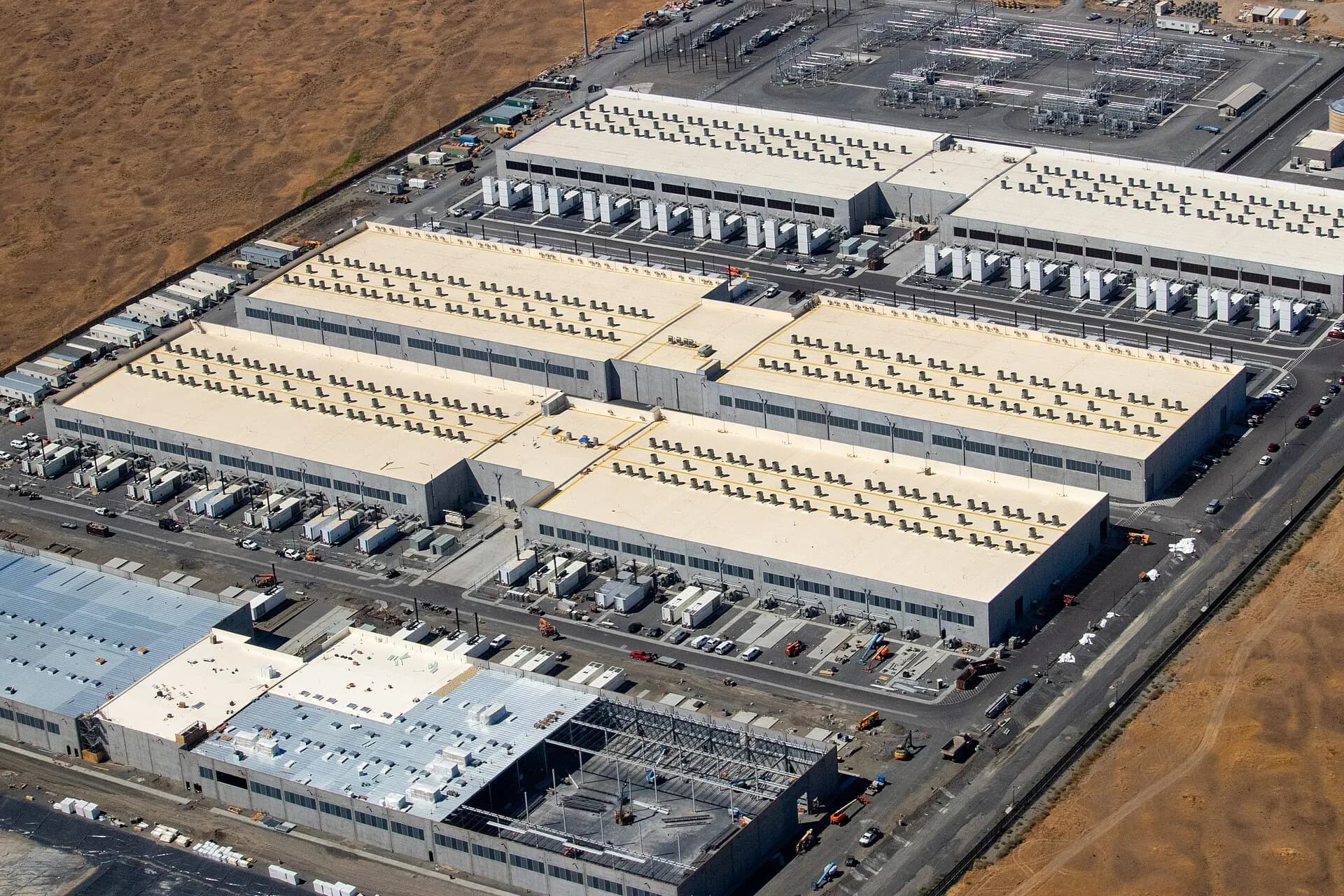
Supply may bind before demand does. Jefferies, using satellite imagery from analytics firm SynMax, now expects 16 to 18 gigawatts (GW) of gross US data center capacity in 2026, up from an earlier 14 to 16 GW forecast and about 11 GW in 2025, The Register reported on September 30. Jefferies says advanced packaging, the step that assembles accelerator chips into finished modules, could cap 2027 deployment in the low 20s of GW, while some announced pipelines imply more than 80 GW by 2028.
Nvidia (NVDA) made the vendor case on October 1. A company blog post said an AI factory's return depends on earning capacity, useful life and demand for its tokens, and argued Nvidia systems are productive, durable and fungible, meaning they can run many kinds of work. It cited SemiAnalysis data showing Vera Rubin NVL72 systems deliver over 30 times the throughput per megawatt of GB300 NVL72 systems, and up to 45 times lower cost per million tokens on the DeepSeek V4 Pro model. Nvidia put the cost of each megawatt of AI factory at roughly $60 million.
On durability, Nvidia pointed to A100 GPUs first shipped in 2020 that remain in commercial service, Silicon Data figures showing a six-year-old A100 is still worth about a quarter of its cost, and Barkr estimates of a nine-to-10-year useful life for GB300 NVL72. At CoreWeave's Fully Connected 2026 event, Nvidia executive Ian Buck said in a theCUBE interview reported by SiliconANGLE that power is a data center's natural cap, and that Nvidia aims to make tokens per watt upwards of 10 times more efficient with each GPU generation.
The numbers
- Annual AI revenue Bain says is needed by 2031
- $6 trillion
- Revenue from existing AI uses (Bain estimate)
- $1.2T to $1.8T
- Gap to come from new categories (Bain)
- About $4.2 trillion
- 2026 capex by five hyperscalers (Bain, per The Register)
- Up to $780 billion
- Gross US data center capacity in 2026 (Jefferies forecast)
- 16 to 18 GW
- Cost of one megawatt of AI factory (Nvidia)
- About $60 million
Why CEOs should care
For technology buyers, the useful question is whether a vendor's per-token economics hold for your workloads. Nvidia's 30x and 45x figures come from SemiAnalysis data on specific systems and, for cost, a specific model, DeepSeek V4 Pro. Ask suppliers which models, response speeds and utilization levels sit behind any cost-per-token claim, and run a pilot on your own workloads before committing to multiyear capacity.
CFOs and boards should read the durability claims alongside Buck's own pitch. If each GPU generation is upwards of 10 times more efficient per watt, capacity bought or leased at current prices may cost more per token than newer systems that follow. Match contract length to a realistic useful life, ask how pricing resets when new hardware ships, and compare depreciation schedules with third-party estimates such as Barkr's five to six years for an eight-GPU H100 system.
Bain's numbers also give boards a sanity check on internal business cases. If existing uses cover at most $1.8 trillion of a $6 trillion requirement, Bain's view is that productivity gains alone will not pay for the buildout. Ask which AI projects create new revenue rather than savings, and ask suppliers how the packaging and power limits Jefferies flags could affect delivery dates, with remedies for delays written into contracts.
The bigger picture
Bain's bar has risen quickly. The Register noted that Bain's 2025 report said the industry would need $2 trillion in annual revenue by 2030; the 2026 report sets $6 trillion by 2031. Bain's $1.5 trillion infrastructure estimate is close to a separate $1.6 trillion forecast from Omdia, according to The Register, and Crawford said funding the buildout sustainably would mean adding roughly 1% to the annual global GDP growth rate.
Investors have rewarded the supply side so far. Bain found hardware and semiconductor stocks grew at a 24% compound annual rate from 2020 to 2026, against 6% for software. The Jefferies data suggests chips, packaging and power will set the pace of construction, while Bain's math says revenue still has to catch up with it.
What’s next
Watch the next capital spending updates from the large cloud providers, and whether Nvidia's Vera Rubin performance claims hold up in independent tests on real workloads. Jefferies flagged two packaging projects launching in 2027 that could add about 6 GW of capacity; their timing will shape how fast announced US data center plans turn into running capacity.
What “Fact-checked” means
Fact-checking means testing a story’s facts against the evidence before it is published. This story went through at least two separate checks before this version was published.
- What we checked
- Its names, figures, dates, job titles, quotes and who said what were checked against the story’s sources, including its main source where it could be opened. The headline was checked for accuracy and overstatement.
- How
- A first check reviewed the whole story. If it passed, a second, skeptical check went back to the sources to look for mistakes in the most important facts. If a check flagged the story, it was edited to fix the problems found, and a separate re-check then reviewed the whole story again.
- Who
- The checks are made by our newsroom, as steps kept separate from the writing, under rules set by our editor, Hussein Mukhtar. A story the checks still flag is held for the editor, who decides whether it is fixed, published or dropped.
- If something is wrong
- “Fact-checked” does not mean error-free. If a material error is found after publication, we correct the story and add a note saying what changed. Report an error
Companies in this story