The news
Chipmaker capital allocation split three ways on September 28 and 29, 2026. Nvidia (NVDA) announced a $150 billion increase to its buyback authorization, AMD (AMD) agreed to buy World Labs for about $8.2 billion in stock, and six Samsung companies committed $1 billion to Helix.
Nvidia announced on September 28 that its board had authorized the extra $150 billion, lifting the total remaining authorization to $235 billion, which the company expects to complete through fiscal year 2028. Nvidia called it the largest share repurchase authorization increase in history. Chief executive Jensen Huang tied the move to a "once-in-a-generation platform shift to AI and accelerated computing" and said Nvidia's cash generation lets it both invest and return capital.
The cash behind that is visible in Nvidia's results for the quarter ended July 26, 2026: revenue of $96.2 billion, up 106% from a year earlier, and free cash flow of $21.3 billion. Nvidia said it returned about $26.0 billion to shareholders that quarter in repurchased shares and dividends, more than the quarter's free cash flow; its cash flow statement shows $19.7 billion paid for buybacks and $6.0 billion in dividends.
AMD went the other way, agreeing to pay with its own shares rather than handing cash back. It announced on September 28 an agreement to acquire World Labs, a San Francisco company that builds AI models which turn text, pictures or video into interactive 3D scenes that can be explored and simulated. Co-founder and CEO Fei-Fei Li will become AMD's executive vice president and chief scientist after the deal closes, reporting to CEO Lisa Su. AMD's securities filing says the number of shares will be set from the average price over 10 trading days ending two trading days before closing. AMD's announcement said it expects the deal to close by the end of 2026, subject to regulatory approvals.
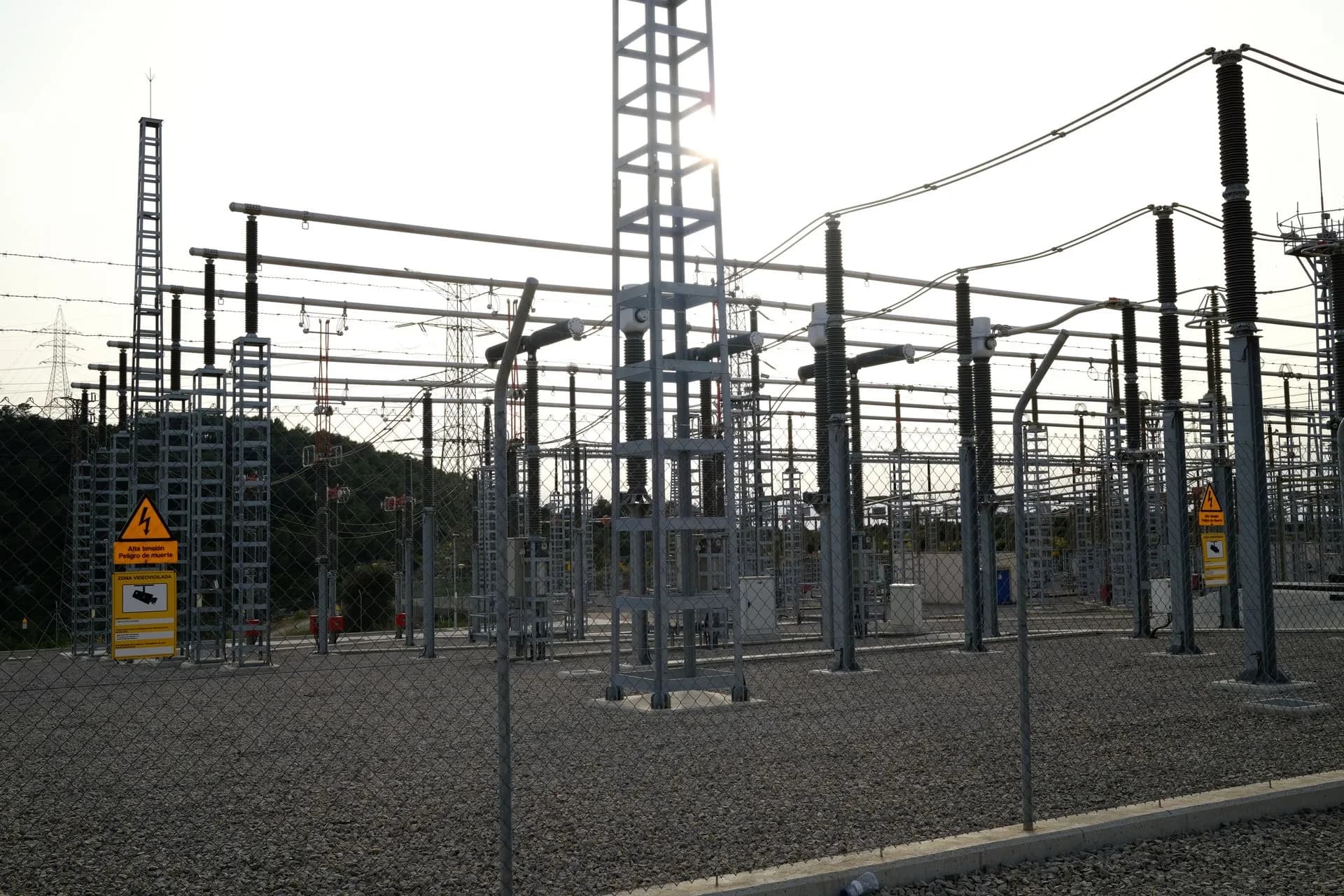
Samsung's commitment targets physical infrastructure. Samsung Electronics (005930.KS) will invest $500 million and five affiliates, including Samsung C&T, Samsung SDS and Samsung SDI, the rest. Helix, launched by KKR (KKR) in June 2026 and led by former Amazon Web Services CEO Adam Selipsky, aims to deliver data centers, power generation, transmission lines and fiber networks for hyperscalers, the largest cloud companies. Samsung's release said Helix plans to lock in energy capacity quickly because power supply is now the biggest constraint on building AI infrastructure.
The moves overlap. Nvidia is itself a founding investor in Helix, alongside KKR, the Kuwait Investment Authority and power producer Vistra (VST), according to KKR's June 11, 2026 launch announcement, which cited more than $10 billion in long-duration capital commitments.
The numbers
- Nvidia buyback authorization increase / total remaining authorization
- $150 billion / $235 billion
- Nvidia free cash flow, quarter ended July 26, 2026
- $21.3 billion
- Nvidia cash returned to shareholders in that quarter (company figure)
- About $26.0 billion
- AMD's price for World Labs (all stock)
- About $8.2 billion
- Samsung group investment in Helix (Samsung Electronics share)
- $1 billion ($500 million)
- Helix long-duration capital commitments at launch (KKR figure)
- More than $10 billion
Why CEOs should care
For suppliers and partners, the direction of spending shows where chip companies want influence. Samsung described its Helix stake as a way to move from supplying hardware components toward shaping AI infrastructure itself, and listed affiliates that make cooling systems, backup power and batteries, and that build and run data centers. Data center developers, utilities and equipment makers should expect chipmakers to show up as investors and co-developers, and should ask how those stakes affect who gets chosen as a supplier.
For CFOs and boards, the three routes offer reference points. A buyback returns cash that is not going into acquisitions or capacity. An all-stock deal like AMD's preserves cash but dilutes existing shareholders by an amount that will not be fixed until closing. Samsung spread its commitment across six group companies, two of them insurers; it said the other four's cooling, construction, data center and battery businesses give it a basis for future work with Helix. Boards weighing their own AI budgets face the same choice: buy capability, fund the physical build-out, or return money.
For buyers of AI computing, AMD's deal matters most. AMD said understanding how models evolve is needed to build the next compute platforms, and Fei-Fei Li said, as reported by Reuters, that World Labs began working with AMD last year on model training and inference optimization on AMD GPUs. Companies evaluating AMD accelerators should ask whether World Labs' research will turn into software tools or reference models they can use, and when.
The bigger picture
Read together, the announcements point to three views of where AI value will build up: in Nvidia's own shares and cash returns, in model know-how at AMD, and in power and data center capacity for Samsung, and through its Helix stake, for Nvidia as well. That is an interpretation of company statements, not a strategy any of the companies has spelled out.
The power theme is the common thread. Samsung's statement about power as the main bottleneck echoes Vistra chief executive Jim Burke, who said at Helix's launch that power generation and grid connections are critical gating factors for AI deployments. In Tech CEO Daily's reading, chip sales depend on those facilities being built.
What’s next
Watch the closing of AMD's World Labs deal, which AMD expects by the end of 2026, and the number of shares it issues; the pace of Nvidia's repurchases in its next quarterly report, after it guided third-quarter revenue to $108.0 billion, plus or minus 2%; and Helix's first announced data center and power projects.
What “Fact-checked” means
Fact-checking means testing a story’s facts against the evidence before it is published. This story went through at least two separate checks before this version was published.
- What we checked
- Its names, figures, dates, job titles, quotes and who said what were checked against the story’s sources, including its main source where it could be opened. The headline was checked for accuracy and overstatement.
- How
- A first check reviewed the whole story. If it passed, a second, skeptical check went back to the sources to look for mistakes in the most important facts. If a check flagged the story, it was edited to fix the problems found, and a separate re-check then reviewed the whole story again.
- Who
- The checks are made by our newsroom, as steps kept separate from the writing, under rules set by our editor, Hussein Mukhtar. A story the checks still flag is held for the editor, who decides whether it is fixed, published or dropped.
- If something is wrong
- “Fact-checked” does not mean error-free. If a material error is found after publication, we correct the story and add a note saying what changed. Report an error