The news
SiMa.ai, a developer of chips and software for running AI directly on machines, announced on September 28 that it raised $150 million in a Series C round at a $1.45 billion valuation. The SiMa.ai Series C will fund a push further into humanoid robots, drones and automotive systems.
Fidelity Management & Research Company and Amplify co-led the round. The company listed Alter Venture Partners, Dell Technologies Capital, Maverick Capital, +ND Capital, Point72, StepStone Group, AllianceBernstein, Baron Capital, J.P. Morgan and the State of Michigan among other investors. SiMa.ai said the round brings its total funding to $500 million.
SiMa.ai sells what it calls a software-centric platform for physical AI, a term for AI that perceives and acts in the real world through robots, vehicles and machines. Its hardware is the Modalix MLSoC family, a line of machine-learning systems-on-chip, meaning processors that combine AI acceleration with other computing functions on one piece of silicon. Its software includes Palette Neat, which the company describes as an agentic environment for building physical AI applications.
The company named ARK Electronics, AVerMedia, Bosch, Emerson, Intrinsic, Kontron, L&T Technology Services, Micron, STIGA, Synopsys, TRUMPF and Virya Autonomous Technologies as customers or partners. It said that between 2024 and 2025 it quadrupled its year-over-year revenue growth, but it did not disclose revenue figures.
SiMa.ai said the proceeds will scale Palette Neat and fund next-generation hardware delivering 1,000 dense TOPS, or trillions of operations per second, a common measure of AI chip throughput. The company said that hardware, slated for the first half of 2028, will include machine-learning IP, chiplets and systems-on-chip. It plans to push further into medium- and high-end drones, humanoid robotics, advanced driver-assistance systems and AI-powered car cockpits. The announcement carried a San Jose, California, dateline.
Mike Dauber of Amplify said in the announcement that SiMa.ai has “all the ingredients to become a category-defining, iconic technology company.”
The numbers
- Series C size
- $150 million
- Post-money valuation
- $1.45 billion
- Total funding to date
- $500 million (company)
- Next-generation hardware timing
- First half of 2028 (company)
- Next-generation chip target
- 1,000 dense TOPS
Why CEOs should care
For manufacturers, logistics operators and automakers, the round is a sign that the market for AI chips outside the data center is maturing. Running AI on the machine itself, rather than sending video and sensor data to the cloud, can cut latency, bandwidth costs and privacy exposure. Engineering and procurement leaders evaluating edge AI suppliers should ask about power consumption per task, software toolchain lock-in, long-term supply commitments and how easily models trained on data-center GPUs can be moved onto the device.
For CFOs, supplier financial health matters in hardware more than in software. A chip design win can lock a product line to one vendor for years, so a supplier running out of money mid-program is costly. A round of this size, with public-market investors such as Fidelity, AllianceBernstein and Baron Capital participating, gives SiMa.ai more runway, but buyers should still seek second-source options and escrow arrangements for critical software.
For boards, the practical question is whether the company's robotics and automation plans assume a single AI chip platform. Directors can ask management which parts of the product roadmap depend on edge AI processors, who the alternative suppliers are, and what switching would cost. Because SiMa.ai lists industrial suppliers such as Bosch, Emerson and TRUMPF as customers or partners, buyers of their equipment may want to ask those suppliers which AI chips sit inside their products and what support commitments stand behind them.
The bigger picture
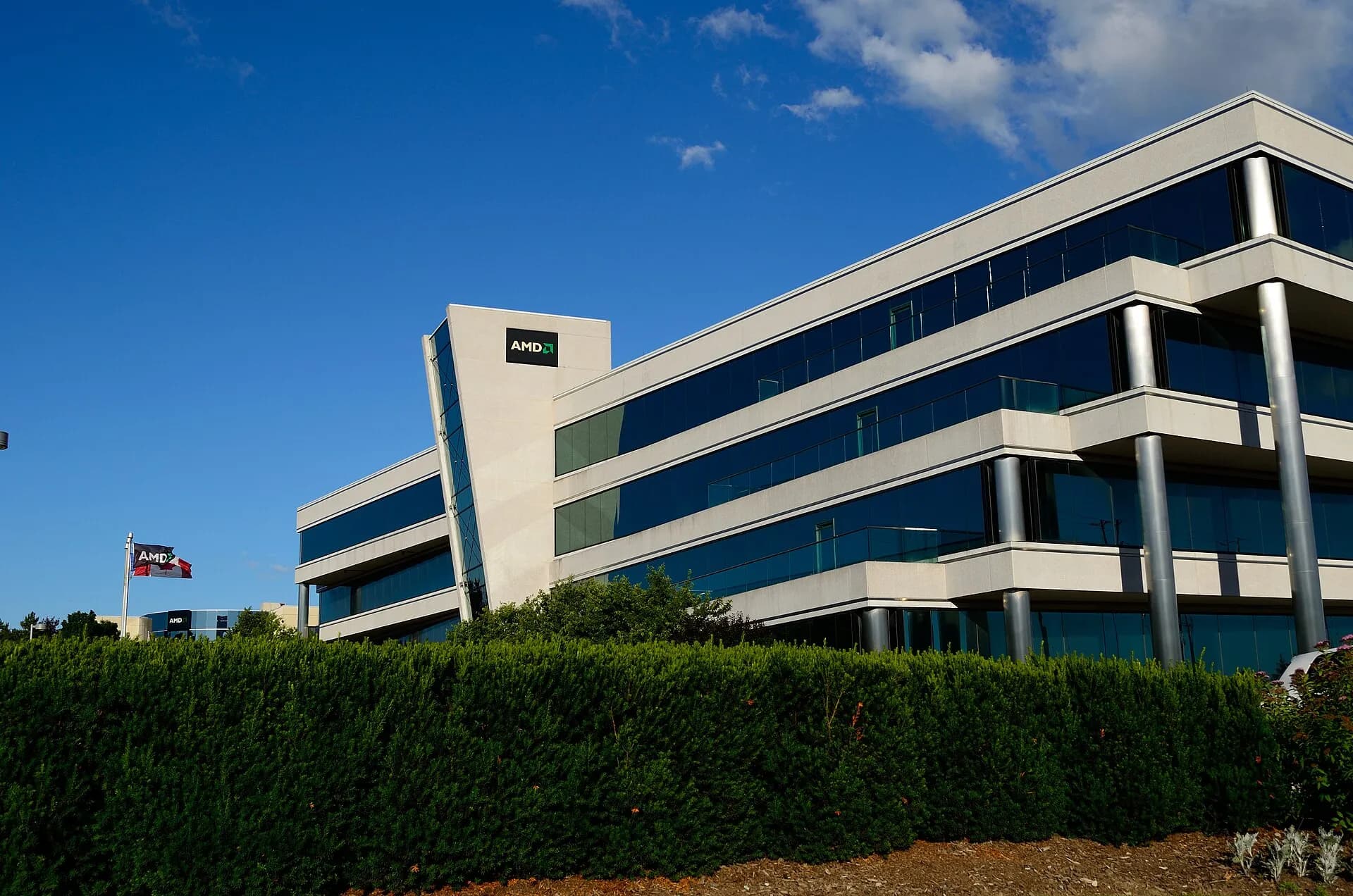
SiMa.ai's raise came on a day when physical AI drew several large commitments. That day, AMD agreed to acquire World Labs, a developer of 3D world models for simulation and robotics, for about $8.2 billion in stock, saying the deal would help shape its future technology roadmaps; AMD expects it to close by the end of 2026, subject to regulatory approvals. TechStartups' September 28 roundup also listed a $250 million growth round for CargoX, an Abu Dhabi-based autonomous delivery vehicle company, and framed the sector as a race over physical-AI hardware, with the biggest late-stage rounds led by very large funds and big-tech venture arms.
What’s next
Watch for SiMa.ai to disclose design wins with automakers or robot makers, and for progress on its next-generation hardware, which the company says is slated for the first half of 2028. Evidence of volume production contracts will be the clearest test of whether its valuation holds as competition in edge AI chips intensifies. Investors will also look for any sign of listing plans; the funding announcement did not mention any.
What “Fact-checked” means
Fact-checking means testing a story’s facts against the evidence before it is published. This story went through at least two separate checks before this version was published.
- What we checked
- Its names, figures, dates, job titles, quotes and who said what were checked against the story’s sources, including its main source where it could be opened. The headline was checked for accuracy and overstatement.
- How
- A first check reviewed the whole story. If it passed, a second, skeptical check went back to the sources to look for mistakes in the most important facts. If a check flagged the story, it was edited to fix the problems found, and a separate re-check then reviewed the whole story again.
- Who
- The checks are made with our newsroom’s technology tools, as steps kept separate from the writing, under rules set by our editor, Hussein Mukhtar. A story the checks still flag is not published automatically; it is held for the editor, who decides whether it is fixed, published or dropped.
- If something is wrong
- “Fact-checked” does not mean error-free. If a material error is found after publication, we correct the story and add a note saying what changed. Report an error
Companies in this story