
The news
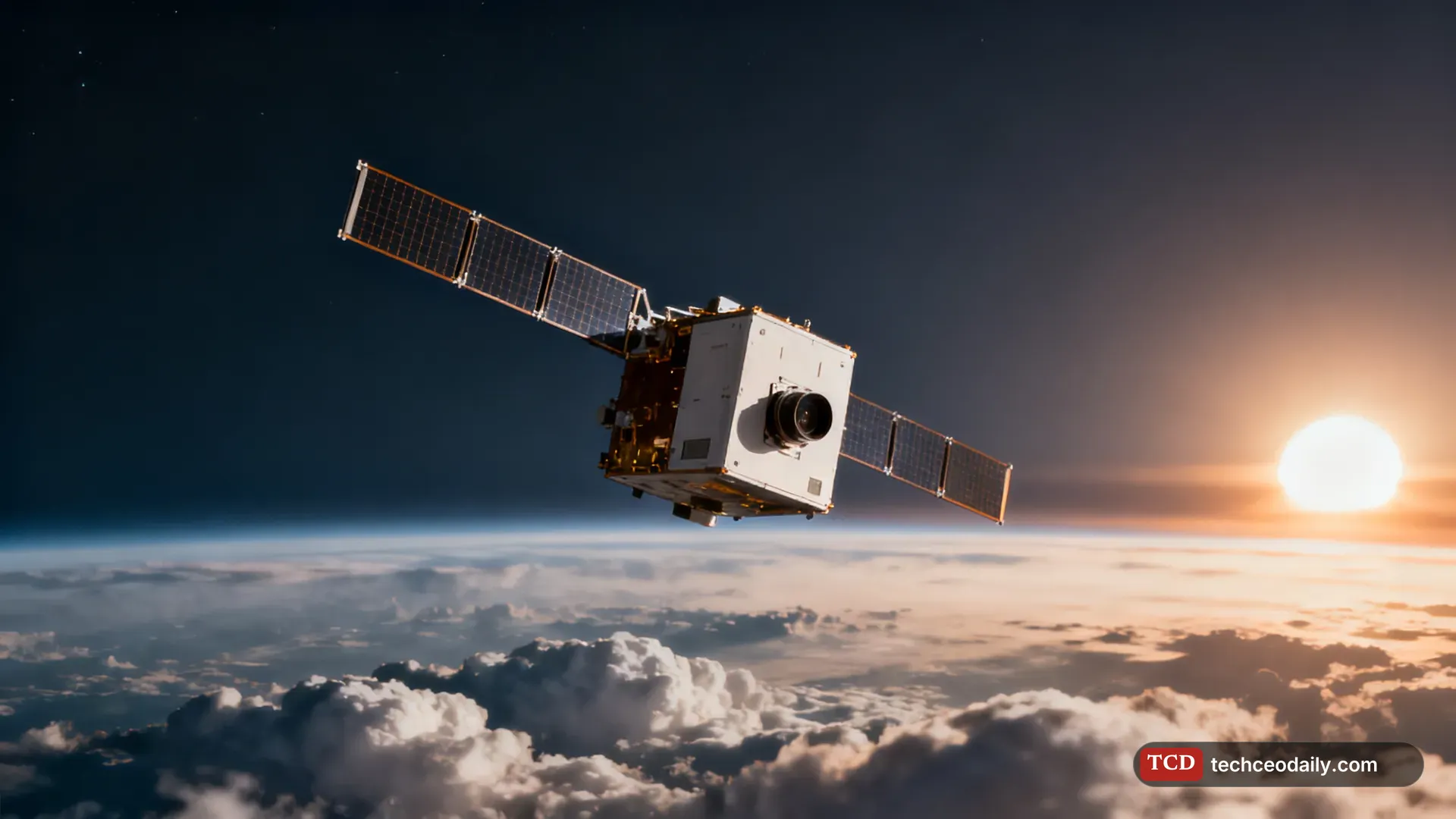
Satlyt, a startup building software to run AI models on satellites, has raised an $8 million seed round led by Houston-based Non Sibi Ventures, according to reports from TechCrunch and SiliconANGLE on October 1, 2026. The Satlyt AI satellites platform is meant to let operators process data in orbit instead of sending all of it to the ground.
The company was founded in 2024 by chief executive Rama Afullo, a Kenyan American engineer who, according to SiliconANGLE, worked as a product manager on SpaceX's Starlink division and as a cloud architect at Google. Satlyt is based in Sunnyvale, California, and Nairobi, Kenya, TechCrunch reported. Bernard Harris, a former NASA astronaut and partner at Non Sibi Ventures, is involved through the lead investor.
Satlyt's software runs on satellites fitted with graphics processing units (GPUs). Processing data on board means less information has to travel over limited radio links to ground stations, which SiliconANGLE described as a way to reduce transmission needs and related technical problems.
The company has flight results to point to. SiliconANGLE reported that a test on a satellite from Momentus, launched in March 2026, ran Google's Gemma 3 1B language model and cut the telemetry data that needed to be sent to Earth by 64%; TechCrunch described the reduction as more than 60%. A second satellite carrying Satlyt's software was set to launch on October 1, 2026 aboard a SpaceX rocket with a TakeMe2Space satellite, for orbital computing tests involving NASA, according to the two outlets. Stellerian plans to run image processing on the system, SiliconANGLE reported.
Afullo told TechCrunch that Satlyt wants to be an open, horizontally integrated alternative to SpaceX's closed approach, comparing SpaceX to the iPhone and Satlyt's goal to Android. TechCrunch reported the company's ambition is to be used on 20% of satellites by the end of the decade. Satlyt is also working on the Gemma 4 E2B model and on tools to spread workloads across several satellites, with a launch planned for 2027, SiliconANGLE reported.
The numbers
- Seed round
- $8 million
- Lead investor
- Non Sibi Ventures
- Telemetry reduction in Momentus test
- 64% (SiliconANGLE)
- Founded
- 2024
- Adoption goal by 2030
- 20% of satellites (company ambition)
Why CEOs should care
For companies that buy satellite imagery or data, the economics are tied to how much data must be downlinked and how quickly. If processing in orbit works at scale, buyers could receive answers, such as a flagged change in an image, instead of huge raw files. Procurement teams should ask their data suppliers whether on-board processing is on their roadmap and how it would change pricing and delivery times.
For CIOs and CISOs, running AI models on hardware nobody can physically reach raises fresh questions. Who updates the model, how is it verified, and what happens if it produces a wrong result that discards useful raw data? Contracts should spell out whether raw data is retained and how model versions are tracked.
For investors and boards, the pitch is a software layer across many operators rather than a single constellation. That is a bet that satellite owners will want a neutral platform, which depends on winning operators beyond the early partners named so far.
The bigger picture
The space industry has spent years cutting launch costs; the next constraint is getting useful data off satellites. Ground station capacity and radio bandwidth are limited, so filtering data in orbit is an appealing fix. Satlyt is still early, with test missions rather than broad commercial deployments, and its claimed results come from a small number of flights.
What’s next
The October 1, 2026 mission with TakeMe2Space and NASA will be the next public test of the platform. Watch for results from that flight, for the Gemma 4 E2B upgrade, and for the multi-satellite workload tools the company plans to launch in 2027.
What “Fact-checked” means
Fact-checking means testing a story’s facts against the evidence before it is published. This story went through at least two separate checks before this version was published.
- What we checked
- Its names, figures, dates, job titles, quotes and who said what were checked against the story’s sources, including its main source where it could be opened. The headline was checked for accuracy and overstatement.
- How
- A first check reviewed the whole story. If it passed, a second, skeptical check went back to the sources to look for mistakes in the most important facts. If a check flagged the story, it was edited to fix the problems found, and a separate re-check then reviewed the whole story again.
- Who
- The checks are made by our newsroom, as steps kept separate from the writing, under rules set by our editor, Hussein Mukhtar. A story the checks still flag is held for the editor, who decides whether it is fixed, published or dropped.
- If something is wrong
- “Fact-checked” does not mean error-free. If a material error is found after publication, we correct the story and add a note saying what changed. Report an error