The news
Google DeepMind, the AI research unit of Alphabet (GOOGL), on September 30, 2026 introduced SynthID Bio, a technique that embeds an invisible, verifiable signature in proteins designed with AI. The aim is to let others check where a biological design came from, a problem that grows as AI tools generate novel proteins.
SynthID Bio works in two ways, according to DeepMind. For protein sequences, it subtly steers which amino acids, the building blocks of proteins, a design model picks. For predicted 3D structures, it adjusts atomic coordinates; for AlphaFold 3, DeepMind fine-tuned the model's diffusion network so the signature is embedded in the model weights.
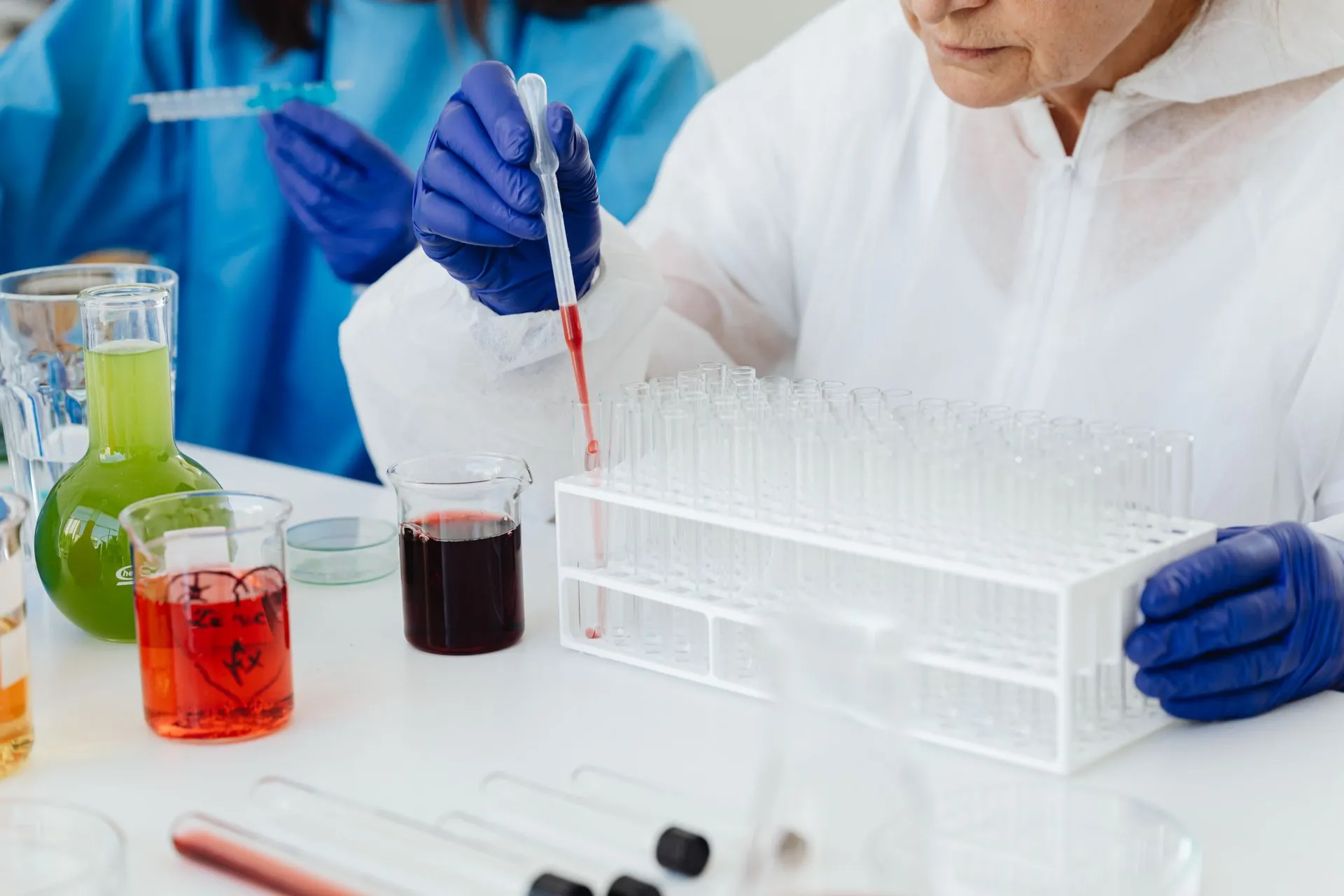
The key test was whether the watermark damages the protein. DeepMind said watermarked protein binders matched unwatermarked versions in binding affinity and hit rate across three targets: VEGF-A, the receptor-binding domain of the SARS-CoV-2 spike protein, and PD-L1. Lab validation was done with Adaptyv Bio, and DeepMind said in early tests a watermarked bacteriophage also proved functional in bacterial cultures.
The research has been published in Nature, according to The Next Web, and DeepMind said it has released the code, lab data and model weights to the research community. Collaborators named by DeepMind include the Hie lab at Stanford University and the Arc Institute, with feedback from Twist Bioscience, a DNA synthesis company.
James Diggans, vice president of policy and biosecurity at Twist Bioscience, said in DeepMind's announcement that watermarking offers a promising biosecurity tool that could strengthen screening. Sarah Carter of Science Policy Consulting called it an important piece of tracking the provenance of biological designs.
The Next Web reported several limits. Security depends on how the cryptographic keys are managed, very short proteins may carry too few marked amino acids to detect, fusing marked and unmarked proteins dilutes the signal, and detection is statistical, which means trade-offs between false positives and false negatives.
The numbers
- Announcement date
- September 30, 2026
- Protein targets tested
- 3 (VEGF-A, SARS-CoV-2 spike RBD, PD-L1)
- Release to researchers
- Code, lab data and model weights
Why CEOs should care
For life-sciences companies using generative design tools, provenance is likely to become a question customers, partners and regulators ask. DNA synthesis providers already screen orders against databases of known threats, and The Next Web reported that watermarks could let them verify that an order came from a trusted AI model, potentially cutting manual review of unfamiliar sequences. Heads of R&D should ask their design-tool vendors whether they plan to support watermarking and how keys would be held.
Boards and general counsel should treat this as an early signal on compliance. No rule requiring watermarks was announced, but a working, open method makes it easier for policymakers and synthesis firms to expect one. Companies that can show where their designs came from may face fewer delays at the synthesis stage.
CISOs and data leaders should note the key-management point. If watermark keys leak, signatures could be forged or stripped, so any rollout needs the same controls applied to other signing keys.
The bigger picture
SynthID began as Google's watermark for AI-generated images and text. Extending it to biology reflects a wider concern that AI can design molecules that look nothing like known threats, which makes conventional screening harder. DeepMind's choice to open-source the method suggests it wants watermarking adopted as a shared standard rather than a Google-only feature. Adoption will depend on whether other AI protein tools integrate it, and The Next Web reported that many currently do not.
What’s next
Watch whether other AI protein-design developers and DNA synthesis companies adopt the method, and whether biosecurity screening guidance starts to reference provenance watermarks.
What “Fact-checked” means
Fact-checking means testing a story’s facts against the evidence before it is published. This story went through at least two separate checks before this version was published.
- What we checked
- Its names, figures, dates, job titles, quotes and who said what were checked against the story’s sources, including its main source where it could be opened. The headline was checked for accuracy and overstatement.
- How
- A first check reviewed the whole story. If it passed, a second, skeptical check went back to the sources to look for mistakes in the most important facts. If a check flagged the story, it was edited to fix the problems found, and a separate re-check then reviewed the whole story again.
- Who
- The checks are made by our newsroom, as steps kept separate from the writing, under rules set by our editor, Hussein Mukhtar. A story the checks still flag is held for the editor, who decides whether it is fixed, published or dropped.
- If something is wrong
- “Fact-checked” does not mean error-free. If a material error is found after publication, we correct the story and add a note saying what changed. Report an error
Companies in this story