The news
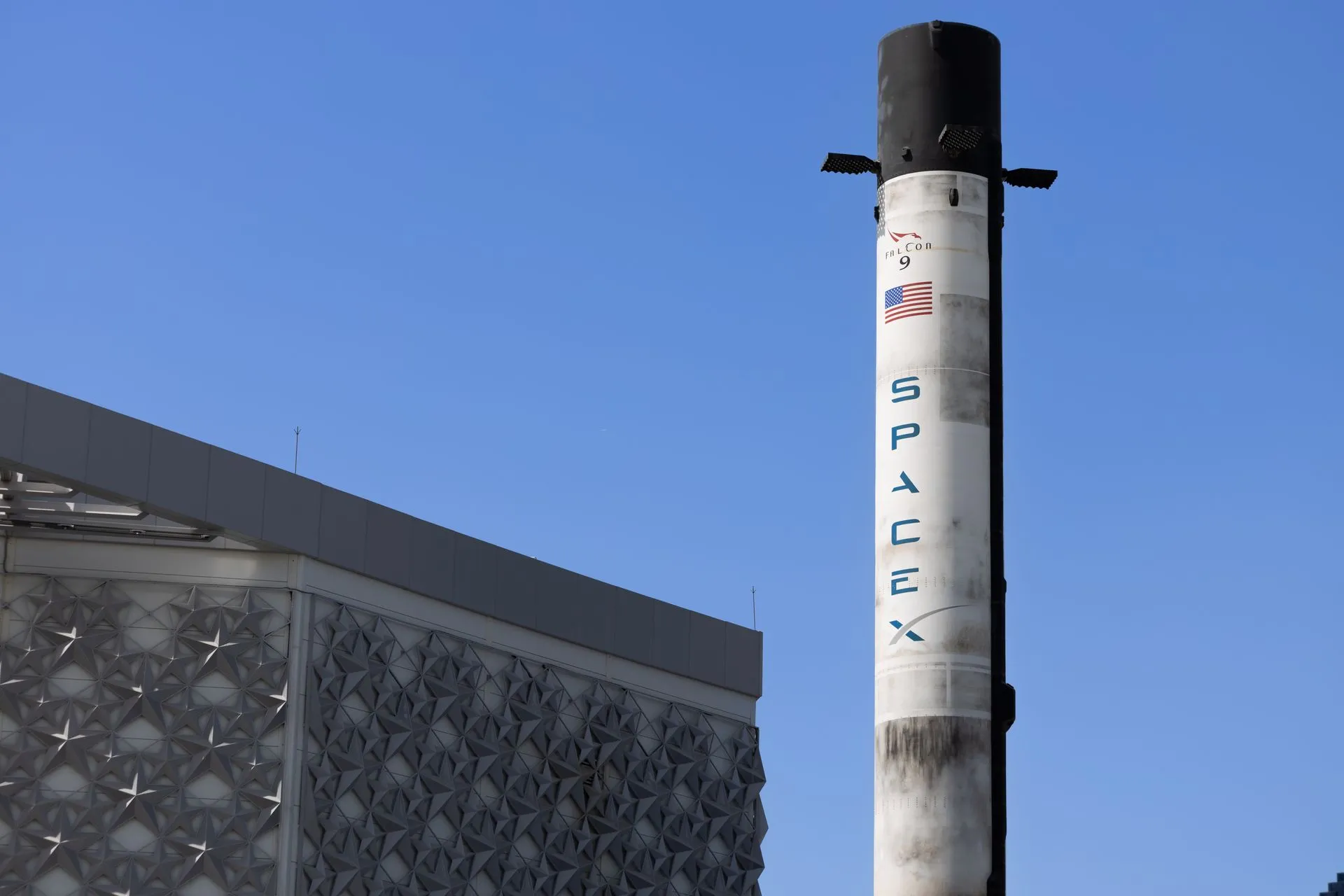
Google's first Project Suncatcher satellite, a prototype that carries the company's Tensor Processing Unit (TPU) AI chips, launched on October 1, 2026, aboard SpaceX's Transporter-18 rideshare mission. Google, part of Alphabet (GOOGL), said the satellite was built with Planet and is operating as expected after contact was confirmed.
In a blog post dated October 1, Travis Beals, senior director of Google's Paradigms of Intelligence team, described Suncatcher as a long-term research moonshot exploring whether space could one day host scalable machine learning infrastructure. Over the coming weeks, Google said, it will gather in-orbit data on how its TPUs handle the stress of spaceflight, radiation and the thermal extremes of space.
TechCrunch reported that the satellite was built by Planet Labs and launched on a SpaceX rocket from California. According to TechCrunch, once commissioned it will run its TPU in 15-minute bursts so it does not strain the satellite's power and thermal management systems.
Alongside the launch, Google published a peer-reviewed paper in the journal Joule on the design of a space-based AI infrastructure system. As reported by The Register, the paper says that if launch costs reach about $200 per kilogram, the annualized cost per unit of power in space could be roughly comparable to what data centers spend on the ground.
That price is far from guaranteed. The Register reported that Google's researchers note SpaceX has cut the cost of putting a kilogram into orbit by 20% after every doubling of the cumulative mass it has launched. Keeping that up would mean launching about 370,000 additional metric tons, the equivalent of around 1,800 successful Starship launches, with components reused 100 times, according to The Register's account of the paper. TechCrunch put the same figure as about 1,800 launches over 10 years, or 180 a year, assuming 200 metric tons per flight, with prices near $200 per kilogram by 2035.
Google's longer-term concept, according to TechCrunch, is a network of 81 satellites flying in close formation and processing in parallel. Beals told TechCrunch that radiation-induced error rates were very low for typical inference work, which TechCrunch reported would be more of a problem for large-scale training.
The numbers
- Launch date (Transporter-18)
- October 1, 2026
- Launch price Google's paper targets
- about $200 per kg
- Starship launches to reach that price (as reported)
- about 1,800
- Additional cumulative launch mass needed (as reported)
- 370,000 metric tons
- Satellites in Google's envisioned cluster
- 81
- TPU run time per burst on the prototype
- 15 minutes
Why CEOs should care
For CIOs and infrastructure buyers, Suncatcher does not change any capacity plan for the next several years. Google itself frames it as research, and the launch-cost path its paper describes runs to roughly 2035 in TechCrunch's reading. The near-term relief for power-constrained AI capacity will still come from grid deals, on-site generation and efficiency gains on the ground, so procurement teams should not discount long-term data center commitments on the promise of orbital compute.
For CFOs and boards, the useful signal is the split between inference and training. Beals said radiation errors were rare for inference, the work of running already-trained models, while TechCrunch reported they pose a bigger problem for training. If orbital compute ever arrives, it is more likely to serve inference, which is where most enterprise AI spending lands. A fair question for cloud account teams: what assumptions about power prices and capacity are built into multi-year AI pricing commitments?
For investors and strategy teams, the 1,800-launch figure is a dependency map. Google's economics rely on SpaceX keeping up a historical cost-reduction rate and flying Starship at very high cadence. Any vendor pitching orbital data centers should be asked which launch price its model assumes and what happens to the numbers if that price is missed.
The bigger picture
Power has become the binding constraint on AI data center growth, which is why hyperscalers are signing long-term energy contracts and exploring new generation. The pitch for orbit is near-constant solar energy without land or grid limits. Google's own paper is candid that the idea works only under specific launch-cost conditions, and The Register reported the research also flags hard problems in networking satellites that must fly in much closer formation than today's constellations.
Google is not alone in the idea. TechCrunch noted that other companies, including Satlyt and Cowboy Space Company, are working in the area, and that Google is a major investor in SpaceX, the company whose launch prices the plan depends on.
What’s next
Google said it will collect in-orbit data on its TPUs over the coming weeks and refine its designs, sharing updates as the mission progresses. The results on radiation and thermal performance, and any further prototypes, will be the first concrete test of whether the paper's assumptions hold.
What “Fact-checked” means
Fact-checking means testing a story’s facts against the evidence before it is published. This story went through at least two separate checks before this version was published.
- What we checked
- Its names, figures, dates, job titles, quotes and who said what were checked against the story’s sources, including its main source where it could be opened. The headline was checked for accuracy and overstatement.
- How
- A first check reviewed the whole story. If it passed, a second, skeptical check went back to the sources to look for mistakes in the most important facts. If a check flagged the story, it was edited to fix the problems found, and a separate re-check then reviewed the whole story again.
- Who
- The checks are made by our newsroom, as steps kept separate from the writing, under rules set by our editor, Hussein Mukhtar. A story the checks still flag is held for the editor, who decides whether it is fixed, published or dropped.
- If something is wrong
- “Fact-checked” does not mean error-free. If a material error is found after publication, we correct the story and add a note saying what changed. Report an error
Companies in this story