The news
GlobalFoundries (GFS) announced on October 8, 2026, a manufacturing agreement to produce silicon interposers for Taiwan Semiconductor Manufacturing Co. (TSM) at its fab in Malta, New York. The TSMC GlobalFoundries interposer deal aims to create a US-based supply of a component that AI chips depend on.
The Register reported the agreement is worth $2 billion. According to GlobalFoundries' announcement, as reported by Investing.com, the initial contract term is five years, with provisions for future capacity expansion. Volume production is expected to ramp during the first half of 2028.
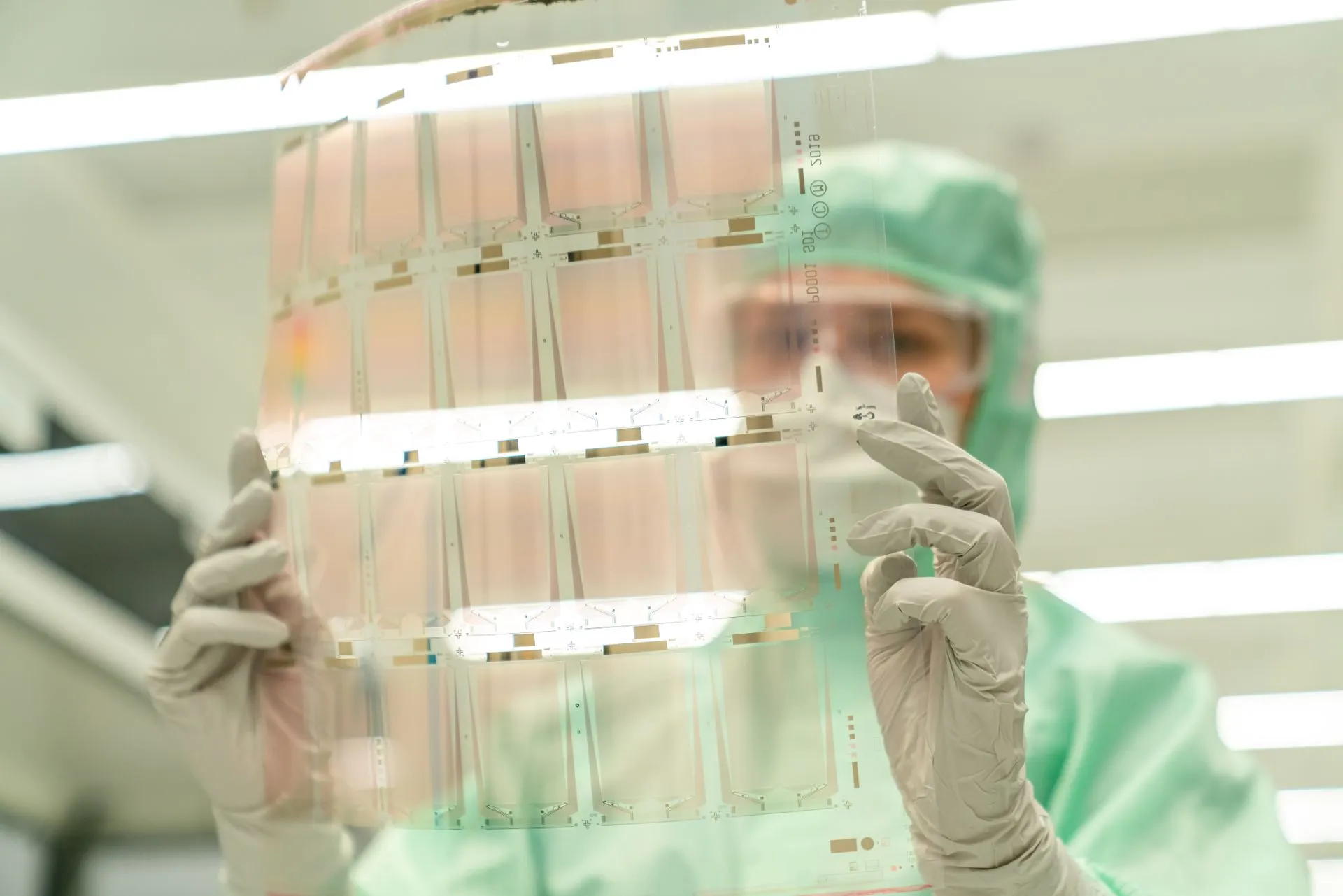
A silicon interposer is a thin layer of silicon that sits beneath processors and memory stacks inside an advanced chip package. It carries high-speed, low-power connections between the dies, which matters most for GPUs and AI accelerators paired with high-bandwidth memory (HBM). The interposers will serve TSMC's chip-on-wafer-on-substrate (CoWoS) packaging, the technology used for many leading AI processors.
GlobalFoundries described the plant as the first US-based source of silicon interposers supporting advanced packaging technologies, including embedded deep trench capacitor components, Investing.com reported. Ed Kaste, senior vice president of GlobalFoundries' CMOS business, said advanced packaging is becoming increasingly critical for next-generation AI systems.
Investors were muted on the news. Investing.com reported GlobalFoundries shares down 2.44% and TSMC shares down 0.94% at the time of its report.
The numbers
- Reported deal value
- $2 billion (The Register)
- Initial term
- 5 years
- Volume production
- 1H 2028
- Location
- Malta, New York
Why CEOs should care
For buyers of AI hardware, packaging, not just chipmaking, has been a limit on supply. The Register noted that chips made in the US have needed to travel to Taiwan for final packaging before coming back. A domestic interposer source reduces one link in that chain, but not until 2028, so it does nothing for 2026 or 2027 allocation.
CFOs and procurement leaders planning multi-year AI infrastructure should ask suppliers where their accelerators are packaged and what share of their supply could shift to US-based steps over time. Contracts signed now may span the period when this capacity arrives.
Boards concerned with geopolitical risk get a modest data point. The Register reported that other US packaging options from Amkor and TSMC's Arizona sites are not expected to be operational until 2028-2029, and that Intel Foundry also offers packaging compatible with TSMC-made chips. The fully domestic AI chip supply chain is still several years away.
The bigger picture
The deal fits a broader push to bring each step of chip production onshore, from wafers to packaging. For GlobalFoundries, which competes at mature process nodes rather than the leading edge, it opens a role in the AI supply chain without building the most advanced transistors.
For TSMC, outsourcing part of the interposer step adds capacity in a market where CoWoS has been a recurring constraint.
What’s next
Watch for capacity figures, customer names and any government support tied to the Malta expansion, and for whether the 2028 ramp holds. Similar announcements from Amkor and TSMC's Arizona packaging plans will show how quickly US capacity catches up.
What “Fact-checked” means
Fact-checking means testing a story’s facts against the evidence before it is published. This story went through at least two separate checks before this version was published.
- What we checked
- Its names, figures, dates, job titles, quotes and who said what were checked against the story’s sources, including its main source where it could be opened. The headline was checked for accuracy and overstatement.
- How
- A first check reviewed the whole story. If it passed, a second, skeptical check went back to the sources to look for mistakes in the most important facts. If a check flagged the story, it was edited to fix the problems found, and a separate re-check then reviewed the whole story again.
- Who
- The checks are made by our newsroom, as steps kept separate from the writing, under rules set by our editor, Hussein Mukhtar. A story the checks still flag is held for the editor, who decides whether it is fixed, published or dropped.
- If something is wrong
- “Fact-checked” does not mean error-free. If a material error is found after publication, we correct the story and add a note saying what changed. Report an error
Companies in this story