
The news
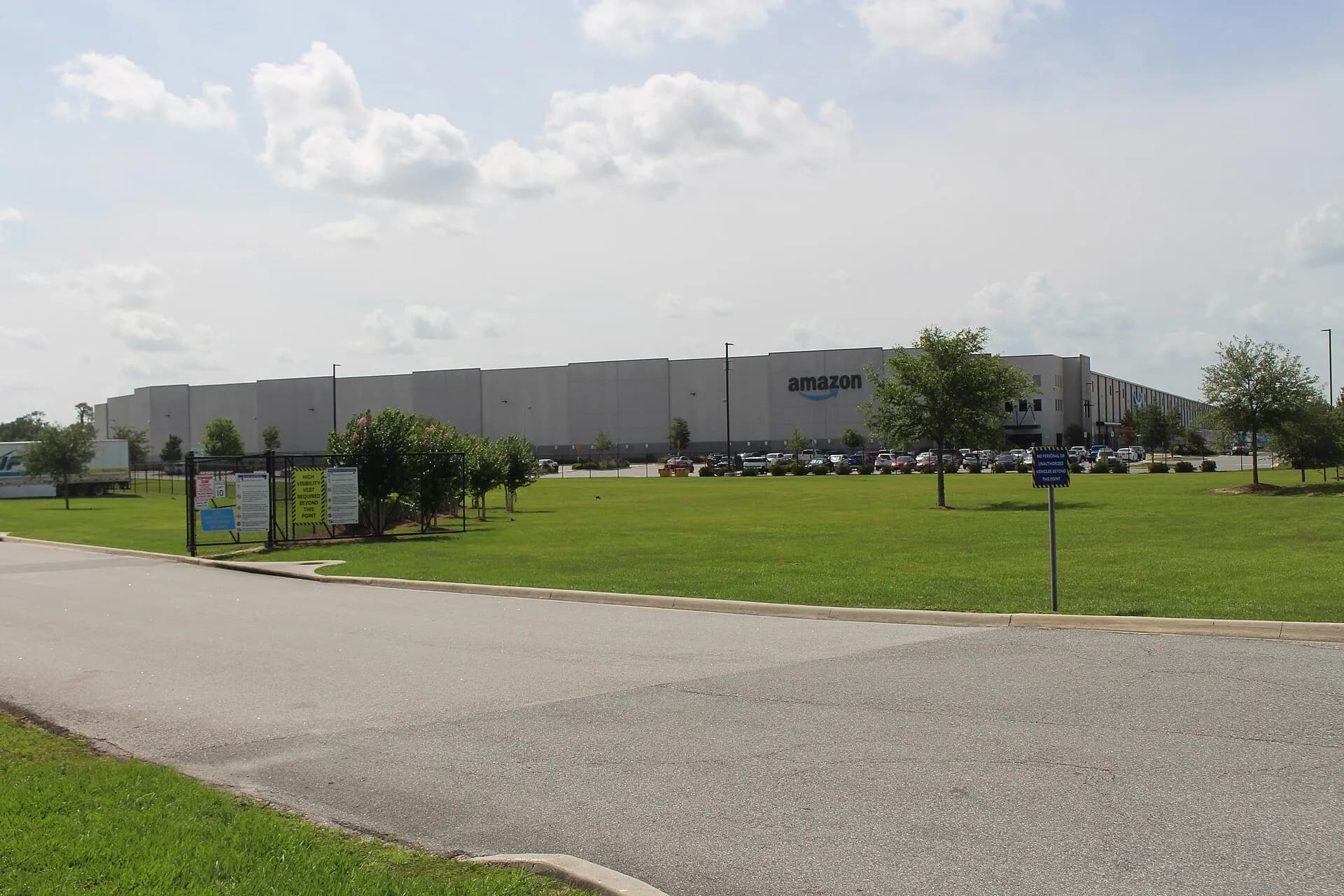
Amazon's (AMZN) cloud unit, Amazon Web Services, said on September 15, 2026 that it cannot restore data stored only in its AWS Bahrain region or one UAE availability zone after drone strikes, proof that zone-level redundancy cannot absorb wartime damage.
AWS posted the update to its health dashboard, where status feeds for its compute service in the Bahrain (ME-SOUTH-1) and UAE (ME-CENTRAL-1) regions were updated that day. According to The National and Reuters reporting carried by Insurance Journal, AWS said the damage in Bahrain spanned multiple availability zones and exceeded “what our regional and multi-AZ services are designed to withstand.” AWS said it had exhausted every option for restoring data and resources that customers had not migrated before the region became unavailable.
In the UAE, Developing Telecoms reported that the zone identified as mec1-az2 cannot be restored, while AWS continues recovery work in the region's other two zones. AWS said it would give an update on the UAE in the coming months and on Bahrain in early 2027, and that it had helped remaining customers re-establish operations in other regions, using backups where available. The Bahrain region opened in July 2019 and the UAE region in August 2022, Runtime Wire reported.
The damage dates to the start of the conflict with Iran, which began with a U.S.-Israeli offensive on February 28, 2026. Reuters, via Insurance Journal, reported that two AWS facilities in the UAE were directly struck by drones in early March, and a Bahrain facility was damaged by a nearby strike. On March 24, 2026, AWS said its Bahrain region was disrupted by drone activity and asked customers to keep migrating, Al Jazeera reported. A second Bahrain zone was hit in April 2026. AWS said most customers had already restored operations in other regions from backups.
The threat was explicit. Al Jazeera reported that Iran's Revolutionary Guard threatened U.S. and Israeli economic infrastructure in the Gulf on March 11, 2026, and an affiliated news agency listed Google, Microsoft, Palantir, IBM, Nvidia and Oracle as targets. Developing Telecoms reported that an Oracle data center in Dubai was also damaged in April 2026.
The numbers
- Date AWS declared data unrecoverable
- September 15, 2026
- Affected Bahrain region
- ME-SOUTH-1, multiple zones
- Unrecoverable UAE zone
- mec1-az2 (ME-CENTRAL-1)
- Next Bahrain update from AWS
- Early 2027
- Time from first strikes to announcement
- About six months
Why CEOs should care
For CIOs and cloud architects, the core lesson is that availability zones protect against routine failures, not the loss of a region. Runtime Wire noted that AWS's guidance calls for cross-region recovery for region-disabling events, and that customers are responsible for configuring their own backups and replication. Inventory every workload whose only copy of data lives in a single region, set recovery targets for full region loss, and run restore tests in a second region. For the most critical data, consider a copy outside the primary provider altogether.
Data residency adds a harder problem. Where local rules require data to stay in a country that has a single cloud region, a regional loss can leave no compliant place to restore. Legal and compliance teams should agree in advance with regulators and providers what happens in that scenario, and consider in-country fallback options such as a second provider or on-premises storage.
CFOs and boards should treat this as a concentration and insurance issue. Service credits typically do not compensate for lost data: AWS's compute service level agreement, for example, applies credits only against future bills and says it sets out customers' sole remedies for unavailability unless their agreement provides otherwise. Ask brokers whether your policies respond when a provider's facility is destroyed by military action. Boards should ask management for a map of critical cloud dependencies by region and a view of which sit in areas with elevated conflict risk.
The bigger picture
The losses come as the Gulf positions itself as an AI infrastructure hub. Runtime Wire noted that OpenAI announced Stargate UAE in May 2025 as an initial 1-gigawatt cluster in Abu Dhabi, part of a broader UAE-US AI campus that CNBC described as a 5-gigawatt development, and Reuters, via Insurance Journal, reported that the UAE is revising plans for a major AI data center project to consider dispersed, underground and blast-resistant designs. On September 23, 2026, Microsoft said it plans to invest more than $10 billion in capital and operating expenses in Kuwait, Qatar, Saudi Arabia and the UAE through 2030 as it expands cloud and AI infrastructure in the region. Physical security, once a footnote in cloud due diligence, now belongs in the main risk assessment.
What’s next
AWS has promised an update on UAE restoration in the coming months and on Bahrain in early 2027. Watch whether AWS or its rivals change resilience guidance, service terms or regional architecture in conflict-exposed markets, and whether Gulf governments adopt hardened designs for new AI campuses.
What “Fact-checked” means
Fact-checking means testing a story’s facts against the evidence before it is published. This story went through at least two separate checks before this version was published.
- What we checked
- Its names, figures, dates, job titles, quotes and who said what were checked against the story’s sources, including its main source where it could be opened. The headline was checked for accuracy and overstatement.
- How
- A first check reviewed the whole story. If it passed, a second, skeptical check went back to the sources to look for mistakes in the most important facts. If a check flagged the story, it was edited to fix the problems found, and a separate re-check then reviewed the whole story again.
- Who
- The checks are made by our newsroom, as steps kept separate from the writing, under rules set by our editor, Hussein Mukhtar. A story the checks still flag is held for the editor, who decides whether it is fixed, published or dropped.
- If something is wrong
- “Fact-checked” does not mean error-free. If a material error is found after publication, we correct the story and add a note saying what changed. Report an error