
The news
DayOne Data Centers, a Singapore-based data center operator, said on October 5, 2026, that it has publicly filed for a US initial public offering. The DayOne IPO would list American depositary shares (ADSs), certificates that let US investors trade a foreign company's stock, on the Nasdaq Global Select Market under the ticker DODC.
Morgan Stanley, J.P. Morgan, BofA Securities and Citigroup are the underwriters, according to the company's announcement. The number of shares and the price range have not been set, and the registration statement, a Form F-1 filed with the Securities and Exchange Commission, is not yet effective.
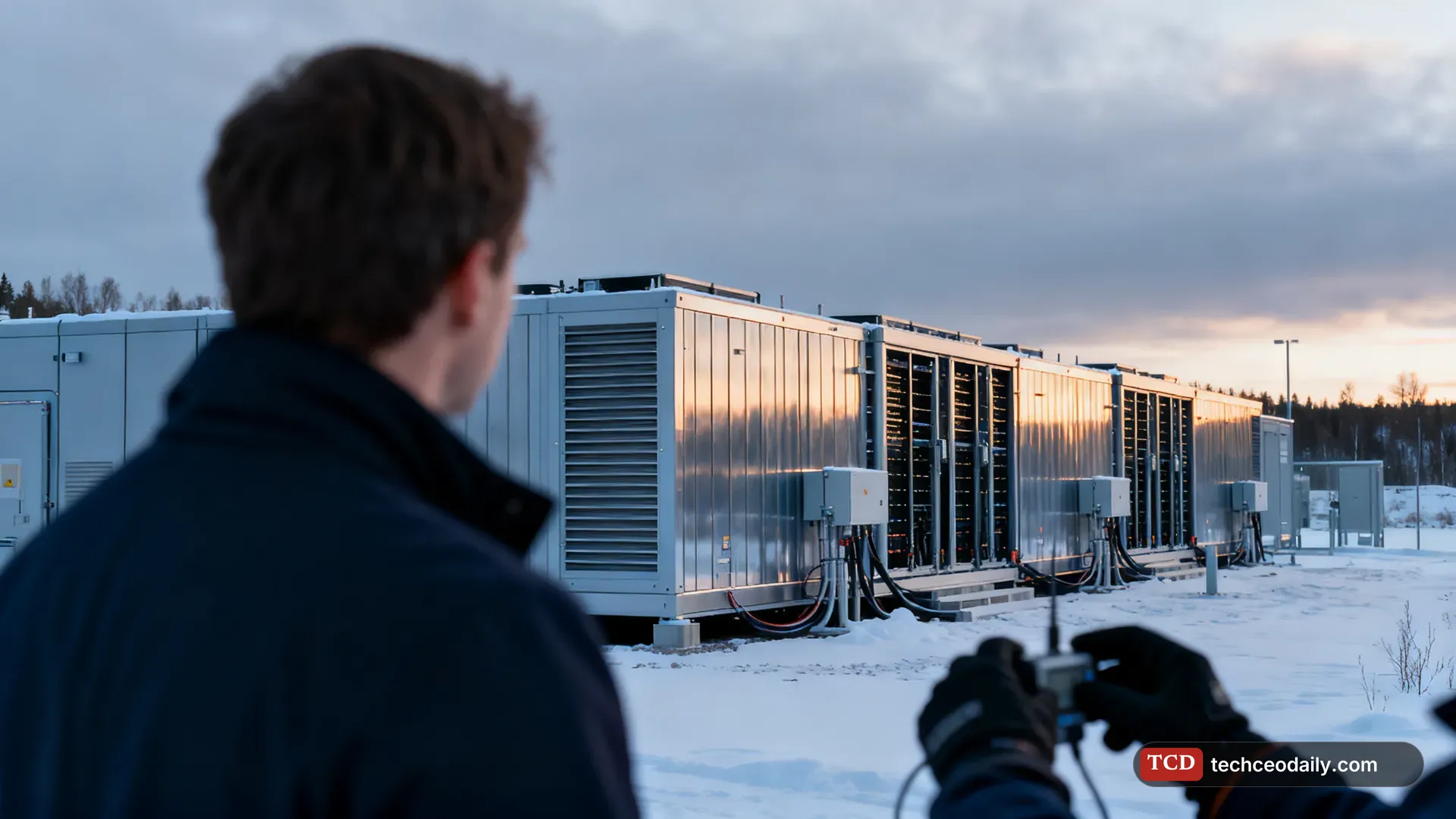
DayOne was founded in 2022 and develops and operates data centers in ten markets across Asia-Pacific and Europe: Singapore, Johor and Greater Kuala Lumpur in Malaysia, Indonesia, Thailand, Tokyo and Kyushu in Japan, Hong Kong, Finland and Spain, the company said.
The prospectus shows rapid growth. DayOne reported $512.0 million in revenue for the six months ended June 30, 2026, compared with $151.5 million a year earlier. It posted a net loss of $77.2 million for the period ($81.9 million attributable to its ordinary shareholders) and adjusted EBITDA, a measure of earnings before interest, taxes, depreciation and amortization that excludes some costs, of $205.9 million.
As of September 20, 2026, the filing lists 2,281 megawatts of bookings, which DayOne defines as capacity committed under legally binding contracts. Of that, 962 MW was in service and 1,328 MW was under construction. The company also raised $3.2 billion in Series C equity during 2026, according to the filing.
The prospectus flags customer concentration as a risk. It says three hyperscale customers, the giant cloud and AI companies, each work with DayOne across multiple markets at around or above 200 MW of bookings. The filing says proceeds will go toward development, construction and working capital.
The numbers
- Ticker (proposed)
- DODC, Nasdaq Global Select Market
- H1 2026 revenue
- $512.0 million (vs. $151.5 million)
- H1 2026 net loss
- $77.2 million ($81.9 million attributable to ordinary shareholders)
- H1 2026 adjusted EBITDA
- $205.9 million
- Bookings (Sept 20, 2026)
- 2,281 MW
- In service / under construction
- 962 MW / 1,328 MW
- 2026 Series C equity
- $3.2 billion
Why CEOs should care
For CIOs and infrastructure buyers in Asia, a listing would bring a new level of disclosure to a supplier many may already be weighing. Public reporting means quarterly visibility into capacity, leverage and customer concentration. Companies negotiating colocation or build-to-suit deals in Singapore, Johor or Tokyo should read the risk factors for what they reveal about power supply, construction timelines and how much capacity is already spoken for.
The concentration data cuts two ways. Three hyperscalers each holding around 200 MW or more means DayOne's growth tracks the spending plans of a handful of the largest cloud and AI companies. For enterprise tenants, that raises a practical question: when capacity is tight, who gets served first? Ask any operator what share of a site is pre-committed and what service guarantees smaller customers receive.
For CFOs and boards watching the capital markets, DayOne is a useful signal. Revenue more than tripled year over year by the filing's numbers, yet the company still posted a net loss. How investors price that mix of growth, heavy capital spending and losses will shape the terms other AI infrastructure companies can expect if they consider going public.
The bigger picture
Most AI infrastructure money has flowed to US hyperscalers and US-based GPU clouds. DayOne is a test of whether New York investors will back an Asia- and Europe-focused data center builder at a time when AI demand is pushing capacity into new regions such as Johor in Malaysia, where land and power are easier to secure than in Singapore.
The deal also arrives in an IPO market that has been selective, with large offerings drawing most of the attention. A smooth listing would widen the path for other infrastructure operators outside the US.
What’s next
The next steps are an amended filing with a share count and price range, followed by a roadshow to investors. The SEC must declare the registration effective before trading can begin; DayOne has not given a timeline.
What “Fact-checked” means
Fact-checking means testing a story’s facts against the evidence before it is published. This story went through at least two separate checks before this version was published.
- What we checked
- Its names, figures, dates, job titles, quotes and who said what were checked against the story’s sources, including its main source where it could be opened. The headline was checked for accuracy and overstatement.
- How
- A first check reviewed the whole story. If it passed, a second, skeptical check went back to the sources to look for mistakes in the most important facts. If a check flagged the story, it was edited to fix the problems found, and a separate re-check then reviewed the whole story again.
- Who
- The checks are made by our newsroom, as steps kept separate from the writing, under rules set by our editor, Hussein Mukhtar. A story the checks still flag is held for the editor, who decides whether it is fixed, published or dropped.
- If something is wrong
- “Fact-checked” does not mean error-free. If a material error is found after publication, we correct the story and add a note saying what changed. Report an error