The news
The semiconductor supply chain decides how fast every company can roll out AI, cloud services and connected products, yet few executives know who actually does what. This guide maps the main players, using their own SEC filings, explains what the CHIPS and Science Act funded, and sets out the supply-chain risks worth planning for.
The three jobs in chipmaking: design, manufacturing and tools
Making a chip involves three distinct businesses. Designers create the chip's blueprint. Foundries, or contract manufacturers, turn those designs into physical chips on silicon wafers in factories called fabs. Equipment makers build the machines that fabs use. A few companies span more than one job, but most specialize, and that specialization creates choke points.
Nvidia and AMD: the chip designers
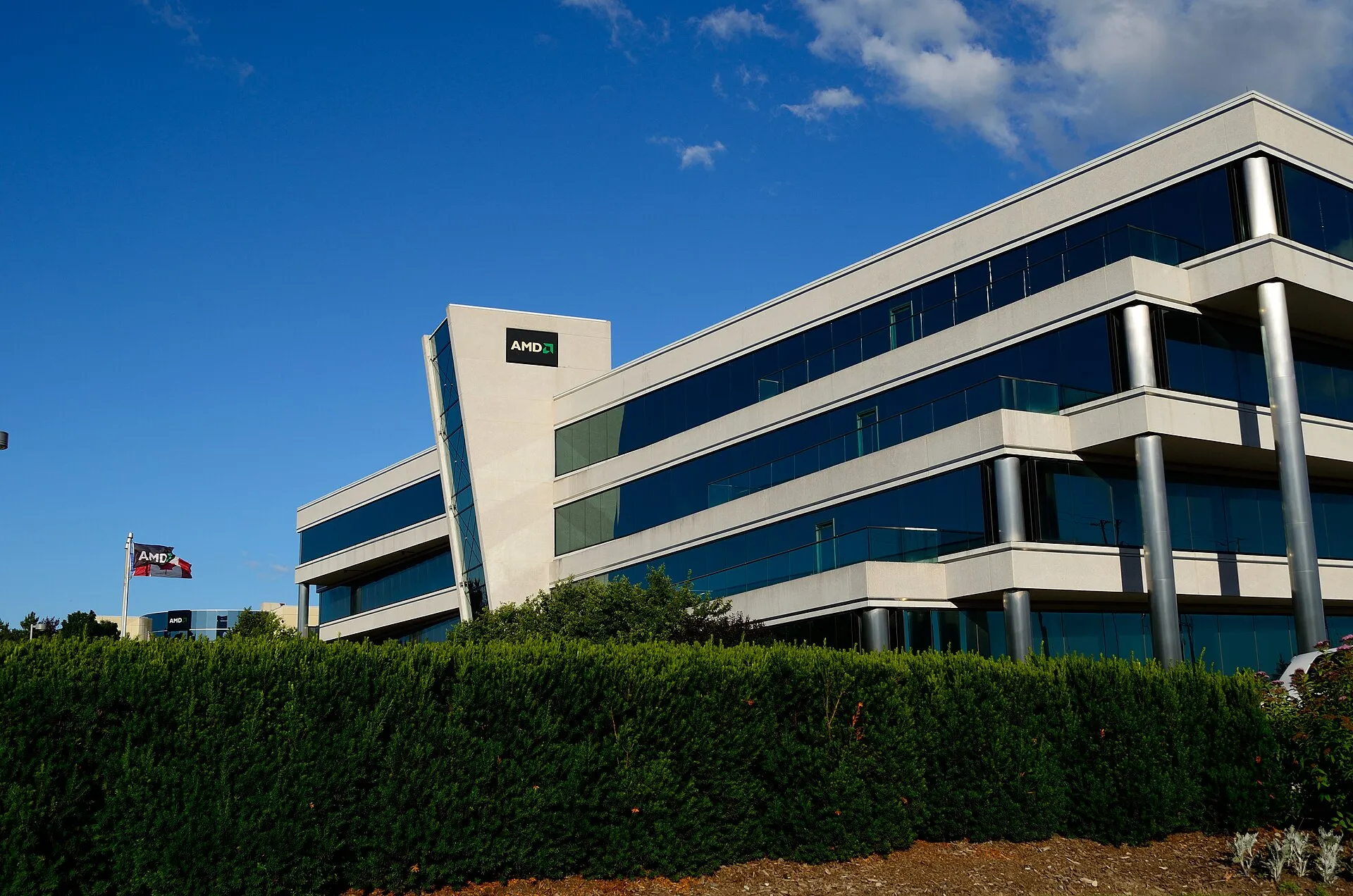
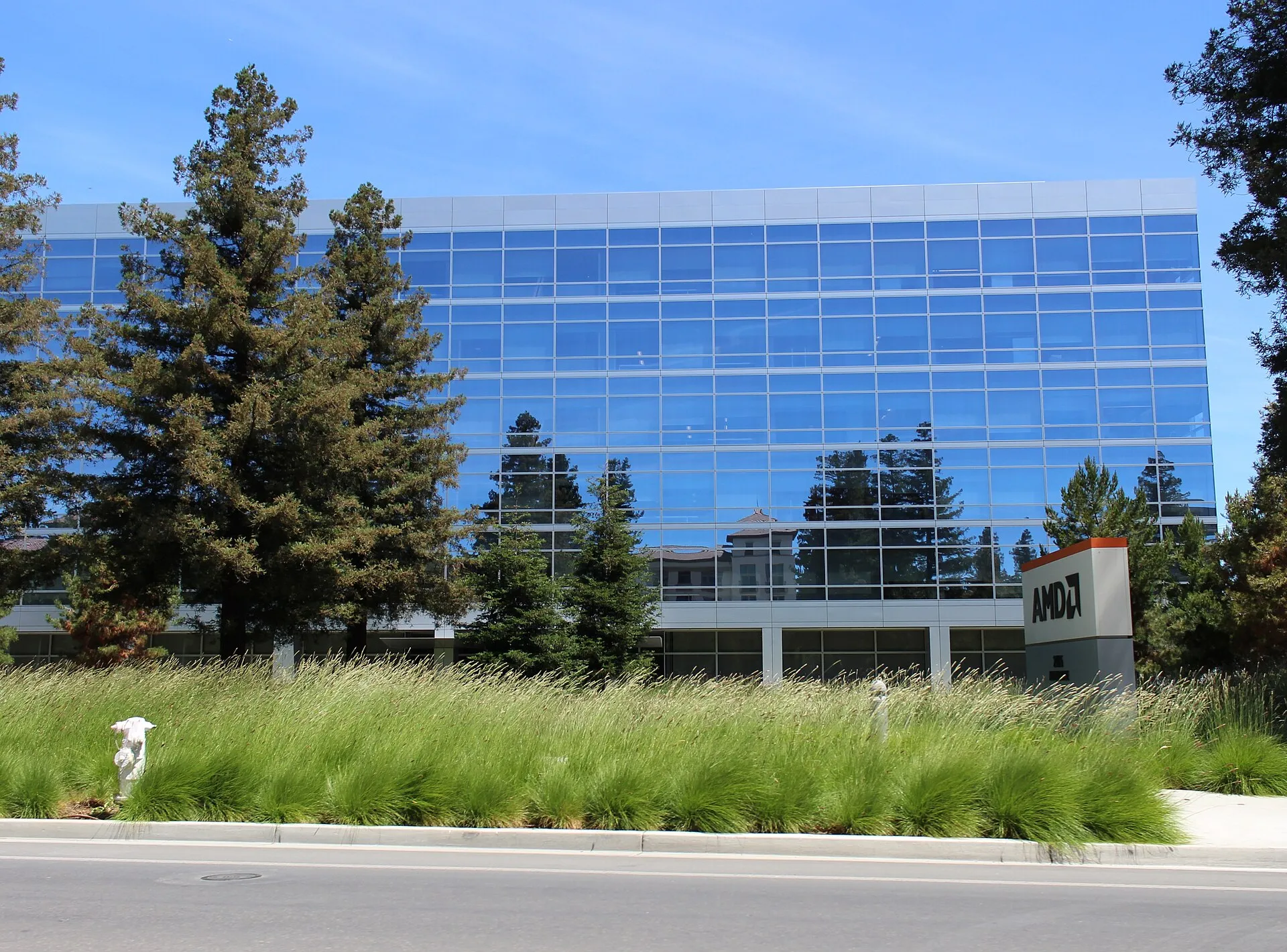
Nvidia (NVDA) designs the graphics processing units (GPUs) that dominate AI data centers but does not own fabs. In its 10-Q for the quarter ended July 26, 2026, Nvidia reported revenue of $96.2 billion, up 106% from a year earlier, of which Data Center revenue was $89.0 billion, up 117%. The filing warns that its business depends on reliable supply from overseas partners, especially in Taiwan and South Korea. Advanced Micro Devices (AMD) is also a designer. Its 10-Q says it relies on Taiwan Semiconductor Manufacturing Company for all wafers for its microprocessor and GPU products at 7 nanometers or smaller, and mainly on GlobalFoundries for larger nodes.
TSMC: the contract manufacturer
Taiwan Semiconductor Manufacturing Co. (TSM) is the contract manufacturer behind most of the world's leading-edge chips. In its annual report for 2025, filed with the SEC on Form 20-F, TSMC said advanced technologies, meaning 7 nanometers and below, accounted for 74% of its wafer revenue, up from 69% in 2024; 3-nanometer chips alone were 24%. Its annual capacity exceeded 17 million 12-inch-equivalent wafers in 2025. A nanometer figure is a label for a manufacturing generation; smaller generally means more transistors, more speed and less power per chip.
TSMC Arizona fabs
TSMC's first Arizona fab entered high-volume production at the end of 2024, according to its 20-F, and the company is building more facilities in Phoenix. In November 2024, its Arizona subsidiary signed agreements with the US Department of Commerce for up to $6.6 billion in direct funding and up to $5 billion of proposed loans under the CHIPS Act. TSMC also operates or is building fabs in Japan and Germany.
Intel: designer and manufacturer
Intel (INTC) is the main US company that both designs chips and makes them, and it also offers manufacturing to outside customers through Intel Foundry. Its CEO, Lip-Bu Tan, described it in August 2025 as the only semiconductor company doing leading-edge logic research and manufacturing in the US. Intel's finances have been strained by the cost of that strategy, which is why government support became central to its plans.
ASML: the lithography toolmaker
ASML, based in the Netherlands, makes lithography machines, which print chip patterns onto wafers. It is the only supplier of extreme ultraviolet (EUV) lithography systems, used for the most critical layers of the most advanced chips. ASML reported 2025 net sales of 32.7 billion euros and 535 systems sold. Its own annual report flags a further choke point: Carl Zeiss SMT is its sole supplier of the optics in its machines, and ASML says the number of systems it can build is limited by that supplier's capacity.
Demand at the leading edge
TSMC's 2025 breakdown shows how quickly demand shifts to newer generations: 3-nanometer chips were 24% of wafer revenue, 5-nanometer 36% and 7-nanometer 14%. In 2024 the 3-nanometer share was 18%. Moving to a new generation requires new fabs and new tools, which is why toolmakers and foundries plan capacity years in advance. ASML says its next generation of EUV machines, called High NA, is moving toward high-volume use: customers had run more than 400,000 wafers on those systems by the end of 2025.
The less visible semiconductor supply chain links
Chips also depend on raw silicon wafers, specialty chemicals, packaging and testing. TSMC says most of its raw wafers come from a limited number of suppliers in Taiwan, Japan, Germany and Singapore. AMD says it relies on third-party partners to assemble, test, mark and pack its products. Advanced packaging, which joins several chips into one module, has become a bottleneck of its own for AI accelerators, so supply depends on more than fab capacity alone.
Intel's own build-out
Intel funds part of its factory construction with outside partners. Its 10-Q for the quarter ended June 27, 2026 shows partners holding a 49% non-controlling interest in its Arizona Semiconductor Co-Investment Program, the structure behind part of its Arizona manufacturing expansion, and partners contributed about $4.1 billion to it in the first half of 2026. The company also has shares held in escrow for the Department of Commerce, tied to its Secure Enclave agreement with the US government. For buyers considering Intel Foundry as an alternative to TSMC, these disclosures show how much of the expansion depends on partner and government money, and are worth reading before committing a product line.
The numbers
- Nvidia revenue, quarter ended July 26, 2026
- $96.2 billion, up 106%
- Nvidia Data Center revenue, same quarter
- $89.0 billion
- TSMC wafer revenue from 7nm and below, 2025
- 74%
- ASML net sales, 2025
- 32.7 billion euros
- CHIPS Act funding to Commerce
- $50 billion ($39 billion incentives, $11 billion R&D)
- TSMC Arizona CHIPS direct funding
- up to $6.6 billion
- US government investment in Intel
- $8.9 billion for a 9.9% stake
Why CEOs should care
For technology buyers, the choke points explain lead times and pricing on servers, AI accelerators and devices. Nvidia's own filing names supply from Taiwan and South Korea as a dependency. When you sign multi-year hardware or cloud capacity deals, ask suppliers where the chips are fabricated and packaged, what allocation you are guaranteed, and what happens to delivery dates if a single supplier is disrupted.
For CFOs and risk officers, concentration is the core issue. AMD's filing says one foundry makes all of its most advanced processors, and ASML says one optics supplier limits its output. Treat these as business-continuity risks in your planning: identify which of your products or services depend on leading-edge chips, hold more buffer where substitution is impossible, and stress-test what a long disruption in Taiwan would mean for revenue.
For boards, the CHIPS Act changes the map but slowly. New US fabs take years to build and ramp, and the most advanced production is still concentrated in Taiwan, according to TSMC's own disclosures. Ask management how much of the company's critical chip supply could be sourced from US, Japanese or European fabs, and on what timeline.
The CHIPS Act and US semiconductor policy
The CHIPS and Science Act of 2022 gave the Department of Commerce $50 billion: $39 billion for manufacturing incentives through the CHIPS Program Office and $11 billion for research and development, according to the National Institute of Standards and Technology, which runs the program. Commerce was still finalizing awards in September 2026, including an R&D award of up to $1 billion to Anderon, a new IBM subsidiary.
Policy has also shifted from grants toward ownership. On August 22, 2025, Intel announced that the US government would invest $8.9 billion in its common stock, buying 433.3 million shares at $20.47 each, equal to a 9.9% stake. The purchase was funded by $5.7 billion of CHIPS grants previously awarded but not yet paid and $3.2 billion from the Secure Enclave defense program. Intel said the stake is passive, with no board seat, and that the government agreed to generally vote with Intel's board. For executives, it signals that Washington now treats leading-edge manufacturing as strategic infrastructure, which can affect export rules, procurement preferences and partner choices.
Geopolitics runs through the numbers. Nvidia's 10-Q shows that, for the quarter ended July 26, 2026, revenue from customers headquartered in China, including Hong Kong, was $7.9 billion, and that shipments of its Hopper data center products to China were less than 1% of Data Center revenue. Export rules, tariffs and Taiwan-China tensions, which Intel lists among its risk factors, can redirect supply and demand quickly. Companies that buy large volumes of chips or chip-based systems should track these rules the way they track interest rates.
What’s next
What to watch: in Nvidia, AMD, Intel and TSMC's next quarterly reports, watch their commentary on supply, packaging capacity and memory costs. ASML's order book is an early signal of future chip capacity, since fabs order lithography machines long before production starts.
Frequently asked questions
What is the difference between a fabless company and a foundry?
A fabless company, such as Nvidia or AMD, designs chips and pays others to make them. A foundry, such as TSMC, manufactures chips designed by its customers.
Why does ASML matter so much?
ASML is the only maker of EUV lithography machines, which are needed to print the most critical layers on the most advanced chips. Without them, leading-edge production cannot expand.
What did the CHIPS Act pay for?
It gave the Commerce Department $50 billion: $39 billion in incentives for factories and equipment in the US, and $11 billion for research and development.
Does the US government own part of Intel?
Yes. Under an agreement announced on August 22, 2025, the government invested $8.9 billion for a 9.9% stake, which Intel describes as passive ownership.
What is the biggest supply-chain risk for business leaders?
Concentration. The most advanced chips depend heavily on TSMC fabs in Taiwan and on ASML equipment, so a disruption at either point would ripple through AI, cloud and device supply.
What “Fact-checked” means
Fact-checking means testing a story’s facts against the evidence before it is published. This story went through at least two separate checks before this version was published.
- What we checked
- Its names, figures, dates, job titles, quotes and who said what were checked against the story’s sources, including its main source where it could be opened. The headline was checked for accuracy and overstatement.
- How
- A first check reviewed the whole story. If it passed, a second, skeptical check went back to the sources to look for mistakes in the most important facts. If a check flagged the story, it was edited to fix the problems found, and a separate re-check then reviewed the whole story again.
- Who
- The checks are made by our newsroom, as steps kept separate from the writing, under rules set by our editor, Hussein Mukhtar. A story the checks still flag is held for the editor, who decides whether it is fixed, published or dropped.
- If something is wrong
- “Fact-checked” does not mean error-free. If a material error is found after publication, we correct the story and add a note saying what changed. Report an error